





Sodium-Ion Battery BMS: Why It Matters, What's Different, and Which BMS to Choose
Sodium-ion batteries are no longer a lab curiosity. They are shipping in energy storage systems, two- and three-wheelers, low-speed vehicles, and off-grid solar installations — and the pace is accelerating. But a sodium-ion pack is not just a lithium-ion pack with cheaper cells. The chemistry is different, the voltage curve is different, and the BMS has to be designed around those differences.
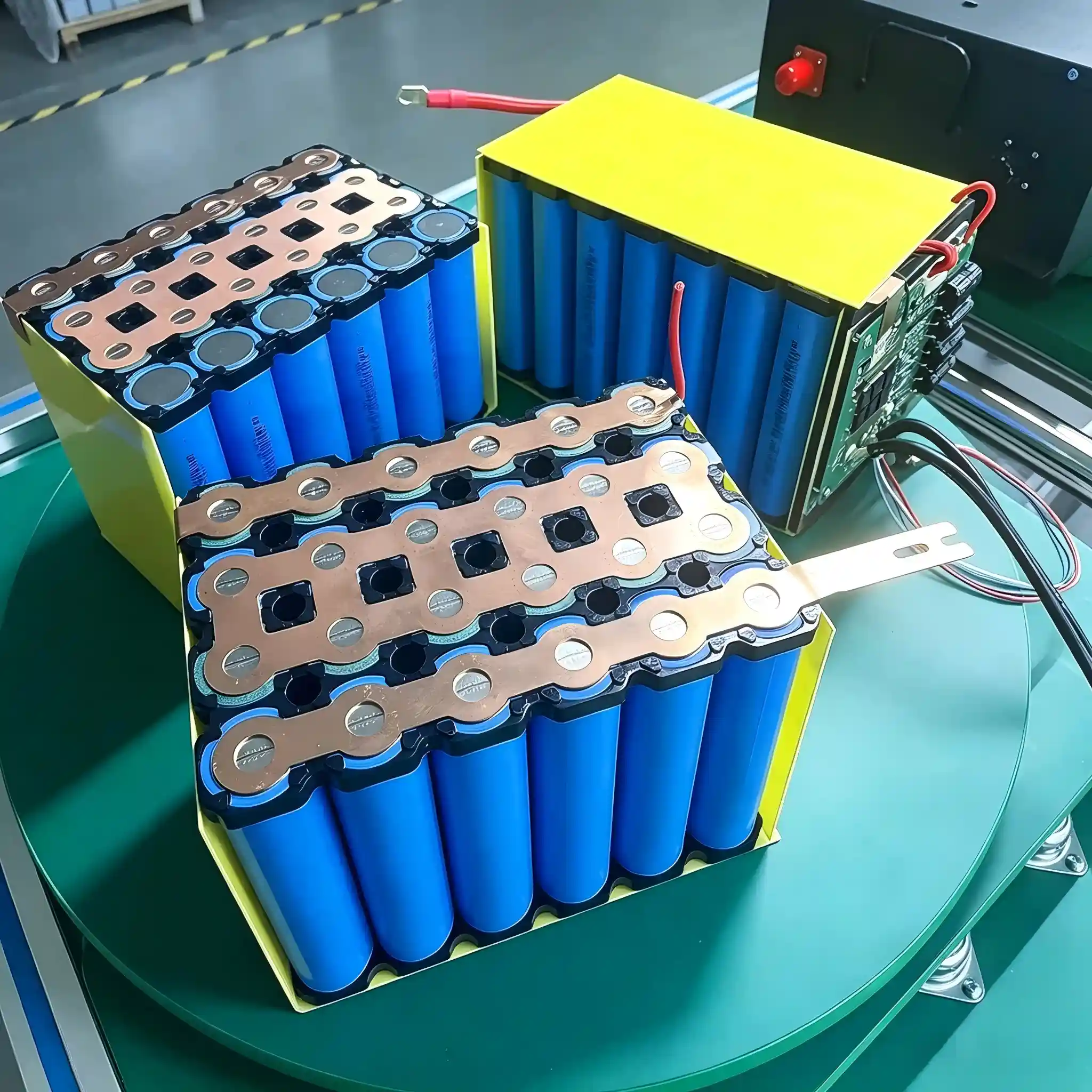
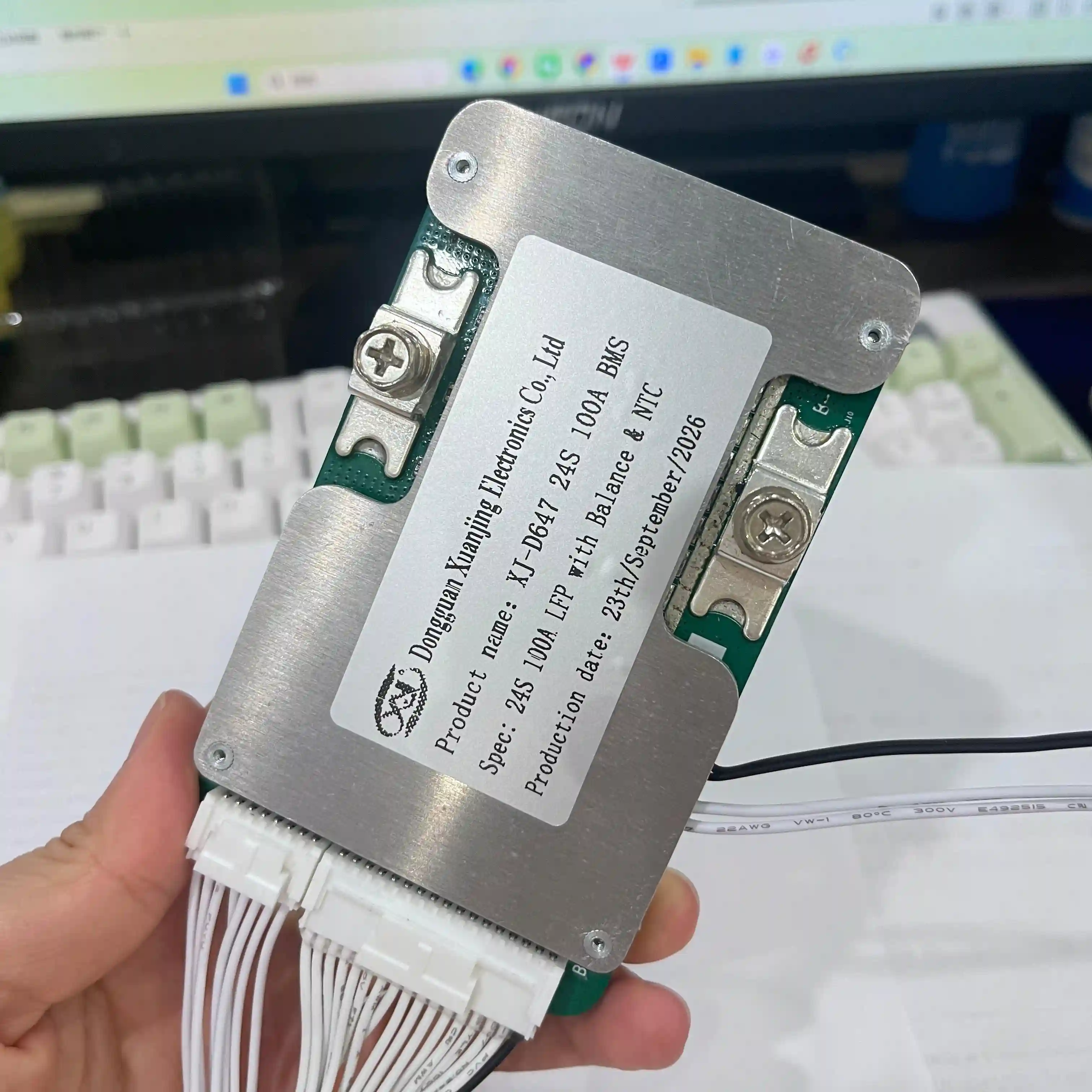
This guide explains why sodium-ion is winning new ground, what a sodium-ion BMS actually needs to do, where the hard engineering problems still live, and how our XJ series of sodium-ion BMS boards covers everything from small 4S packs to 300 A systems.
Why Sodium-Ion Is Taking Off
The main reason is cost — but not only cost. Sodium-ion batteries are attractive because they solve several problems at once.
Raw material abundance and price stability
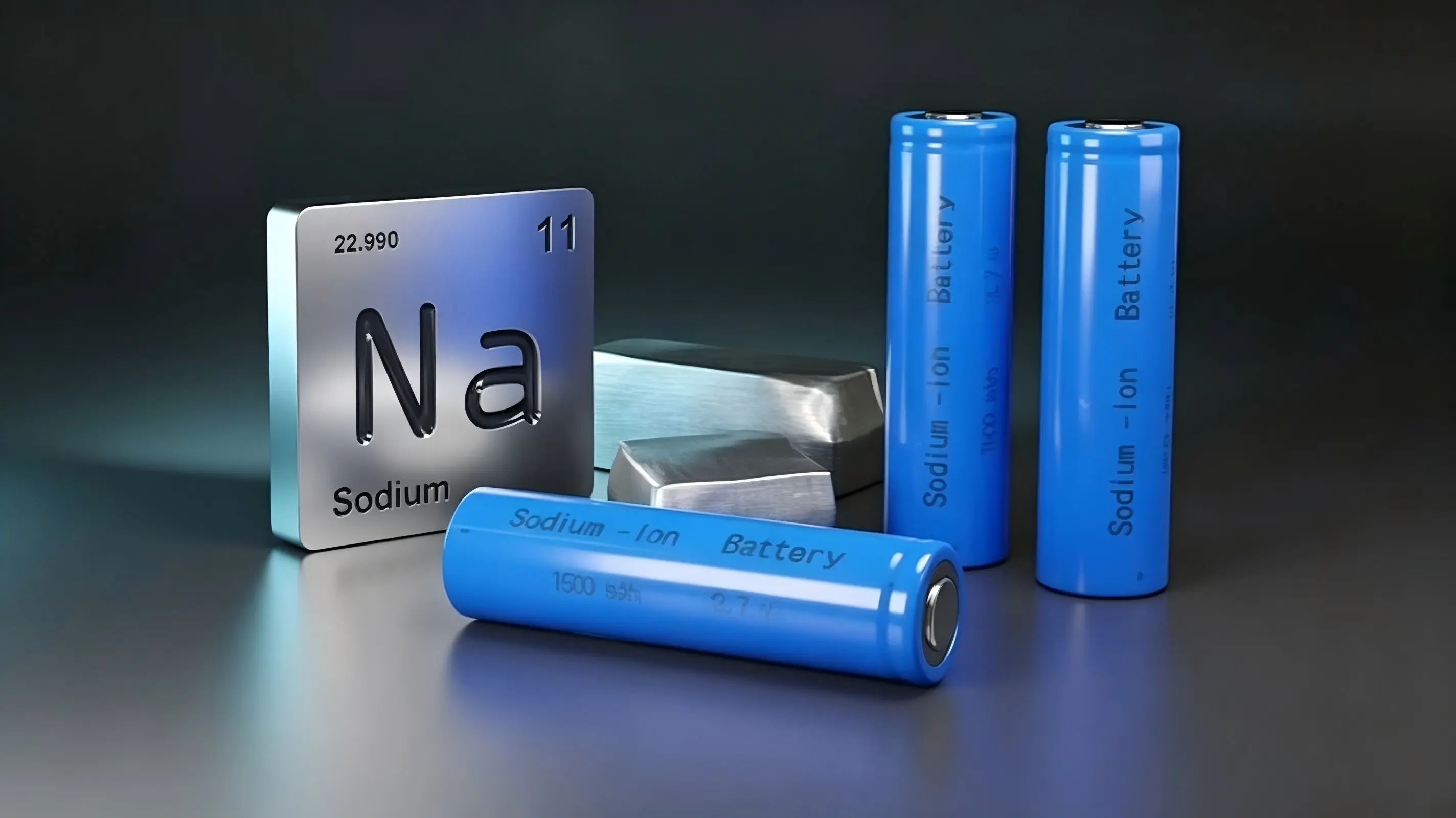
Sodium is the sixth most abundant element on Earth. It is everywhere — in rock salt, in seawater. Unlike lithium, cobalt, and nickel, sodium supply is not concentrated in a handful of countries and is not subject to the same commodity price shocks. Cathode materials (typically Prussian white, layered oxides, or hard carbon anodes) use cheap, widely available inputs.
This matters to battery buyers who watched lithium carbonate prices swing through a tenfold cycle. Sodium-ion offers a structurally cheaper and more stable bill of materials.
Manufacturing compatibility
Sodium-ion cells can be produced on the same production lines used for lithium-ion. Cell factories do not need to rebuild — they re-tool. That keeps the capital cost of scaling low and lets existing gigafactories pivot quickly.
Low-temperature performance
Sodium-ion cells retain 80–90% of their capacity at −20 °C and keep working well below −40 °C. Lithium-ion packs lose range, power, and charge acceptance in cold weather. For markets with harsh winters — or simply for outdoor energy storage and two-wheelers in South Asian winters — sodium-ion is a genuine advantage.
Safety
Sodium-ion chemistry is less prone to thermal runaway than NMC, and packs can be discharged to zero volts without the catastrophic copper-collector dissolution that kills a deep-discharged lithium-ion cell. That margin matters in products that are stored, transported, or used by non-expert end users.
Fast charging
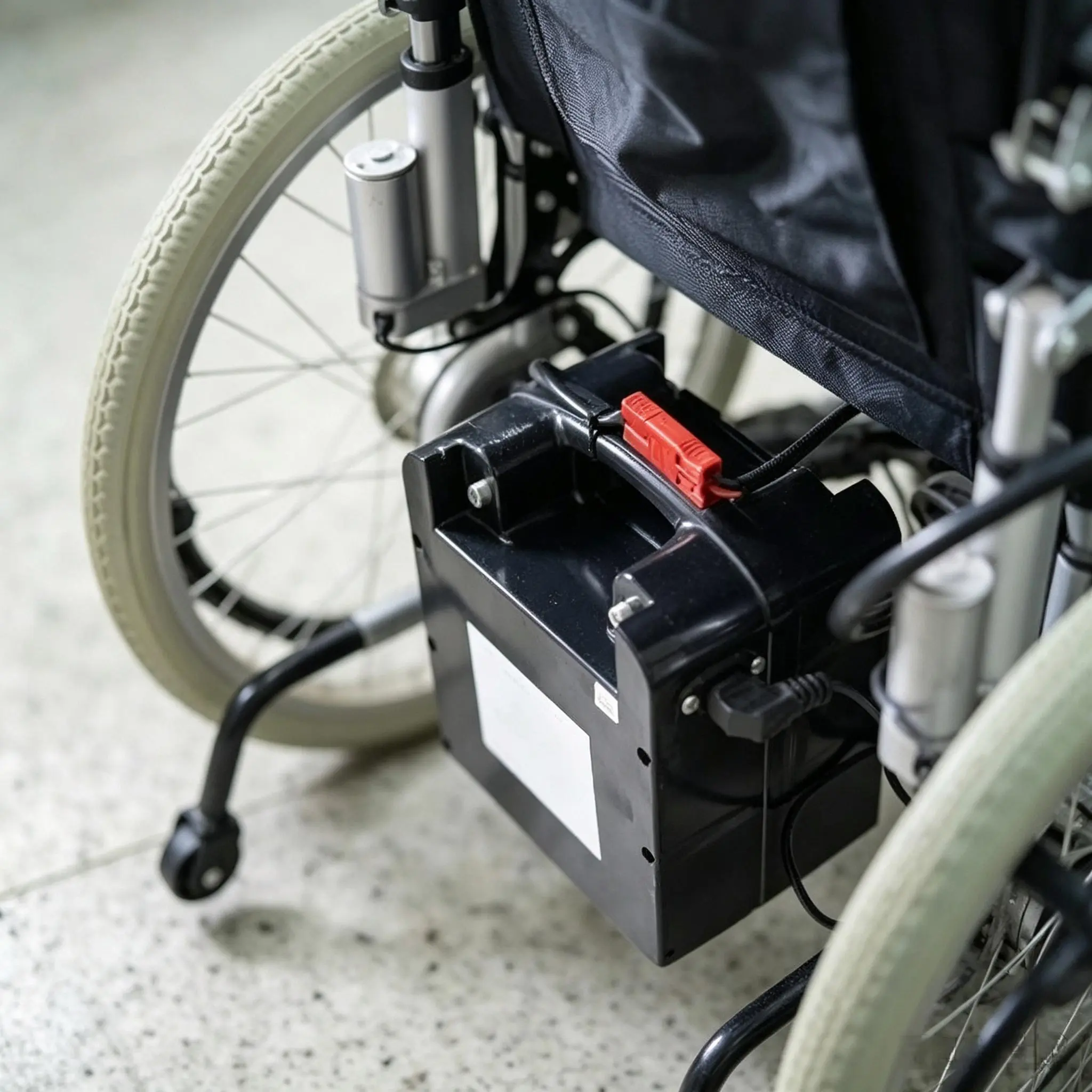
Sodium-ion cells accept high charge rates without degrading as quickly as many lithium chemistries. That makes them a natural fit for swappable two- and three-wheeler batteries — a market that depends on a fast, predictable charge or swap cycle.
What Makes a Sodium-Ion BMS Different?
A sodium-ion pack does not use the same BMS parameters as a lithium-ion pack. The core differences come down to voltage and state-of-charge.
| Parameter | Sodium-Ion | LFP (for reference) |
| Nominal cell voltage | ~3.0–3.1 V | ~3.2 V |
| Full-charge voltage | ~3.65–4.1 V (chemistry-dependent) | ~3.65 V |
| Low-voltage cutoff | ~1.5–2.0 V | ~2.5 V |
| OCV curve shape | Very flat plateau | Flat but slightly steeper |
| Low-temp capacity retention | Excellent (80–90% at −20 °C) | Moderate (60–70% at −20 °C) |
| Deep-discharge tolerance | Can be stored near 0 V without copper dissolution | Risks copper dissolution below ~2.0 V |
The practical consequences for a BMS:
- Voltage thresholds must be re-mapped. A standard lfp bms set to 2.5 V cutoff and 3.65 V charge limit will not protect a sodium-ion pack correctly. Our boards ship with sodium-ion-compatible overvoltage and undervoltage thresholds pre-configured — no need to buy a generic Li-ion BMS and hope for the best.
- SoC estimation is harder. The flat OCV plateau means voltage alone tells you almost nothing about remaining capacity in the middle of the pack. Accurate SoC requires Coulomb counting combined with a calibrated OCV lookup table — exactly the kind of firmware tuning that distinguishes a sodium-native BMS from a repurposed Li-ion one.
- Balancing thresholds shift. Sodium-ion cells can show wider early-life cell-to-cell variation, especially in the first 50–100 cycles. Active balancing becomes more valuable at higher cell counts (16S+) where passive balancing alone cannot keep cells within tolerance.
- Cold-temperature charge limits are less restrictive. Because sodium-ion tolerates low temperatures better, the BMS does not need to block charging at 0 °C the way many Li-ion packs do — though high-current charging in extreme cold still benefits from NTC monitoring.
The Technical Challenges of Sodium-Ion BMS Today
Sodium-ion is a young chemistry, and the BMS layer is still catching up. The main pain points are:
1. SoC accuracy on a flat voltage plateau
This is the single biggest BMS problem. On an LFP pack, you can infer 80% of SoC from OCV. On a sodium-ion pack, the voltage curve is nearly flat across 20–90% SoC. The BMS has to rely on current integration (Coulomb counting), and the drift between the estimated and real SoC grows over hundreds of cycles unless the algorithm is carefully tuned to each cell model.
2. Cell-to-cell variation is still immature
Sodium-ion manufacturing is scaling fast but cell uniformity is not yet where LFP is. A fresh pack can show 50–100 mV spread between cells, and that spread widens as the pack cycles. A BMS that only does basic passive balancing at 50 mA will not keep up — active balancing is increasingly recommended for 16S+ packs.
3. Less long-cycle data
Lithium-ion has 30 years of cycle-life, calendar-aging, and failure-mode data. Sodium-ion has a fraction of that. BMS designers have to be conservative about derating factors, end-of-life thresholds, and warranty assumptions — and customers need a BMS partner who is actively accumulating field data, not just buying generic reference designs.
4. Voltage-window misapplication
Because sodium-ion looks superficially like LFP (both are "3.x volt" cells), some integrators reuse LFP BMS firmware. The result: packs that stop charging at the wrong voltage, cut off too early, or report wildly inaccurate SoC. A sodium-native BMS — or one with configurable sodium profiles — avoids this.
The Sodium-Ion Market: How Big, Where, and Growing Where?
Sodium-ion is still small compared to lithium-ion, but the growth curve is steep. The market is being pulled by three forces: the cost pressure on energy storage buyers, the electrification of two- and three-wheelers in Asia, and the push for supply-chain independence.
Where the demand is today
China is both the manufacturing base and the largest market. Chinese cell makers (HiNa, Natron, Zoolnasm, CATL's Naxtra line, and others) are shipping at scale into stationary storage, low-speed EVs, and two-wheelers.
India is the most important growth market outside China. India has a massive two- and three-wheeler fleet, an aggressive electrification policy (FAME, PLIs), and a long coastline rich in sodium resources. Sodium-ion's low-temperature tolerance, fast charging, and low cost align almost perfectly with Indian two-wheeler and e-rickshaw use cases. Indian energy-storage tenders are also starting to specify sodium-ion as an accepted chemistry.
Pakistan, Bangladesh, and Southeast Asia are next in line. These markets share India's profile: large motorcycle and three-wheeler fleets, high energy prices, and growing interest in solar-plus-storage and off-grid power.
Africa — particularly East and West Africa — is a longer-term opportunity. Off-grid solar home systems, mini-grids, and telecom backup power need a battery chemistry that is cheap, safe in hot climates, and tolerant of rough handling. Sodium-ion's thermal stability and deep-discharge tolerance fit that use case well, though the supply chain is still developing.
Europe and North America are watching closely, especially for grid-scale storage where sodium-ion's lower energy density is irrelevant and cost is everything. But near-term volume is still Asia-led.
What the market looks like
Industry forecasts consistently project sodium-ion growing from a small niche in the mid-2020s to a multi-GWh segment by the early 2030s, with stationary storage and light electric vehicles accounting for the bulk of demand. The exact number depends on who is counting, but the direction is not in dispute: sodium-ion is the first new battery chemistry to reach gigawatt-hour scale since LFP.
Our Sodium-Ion BMS Portfolio
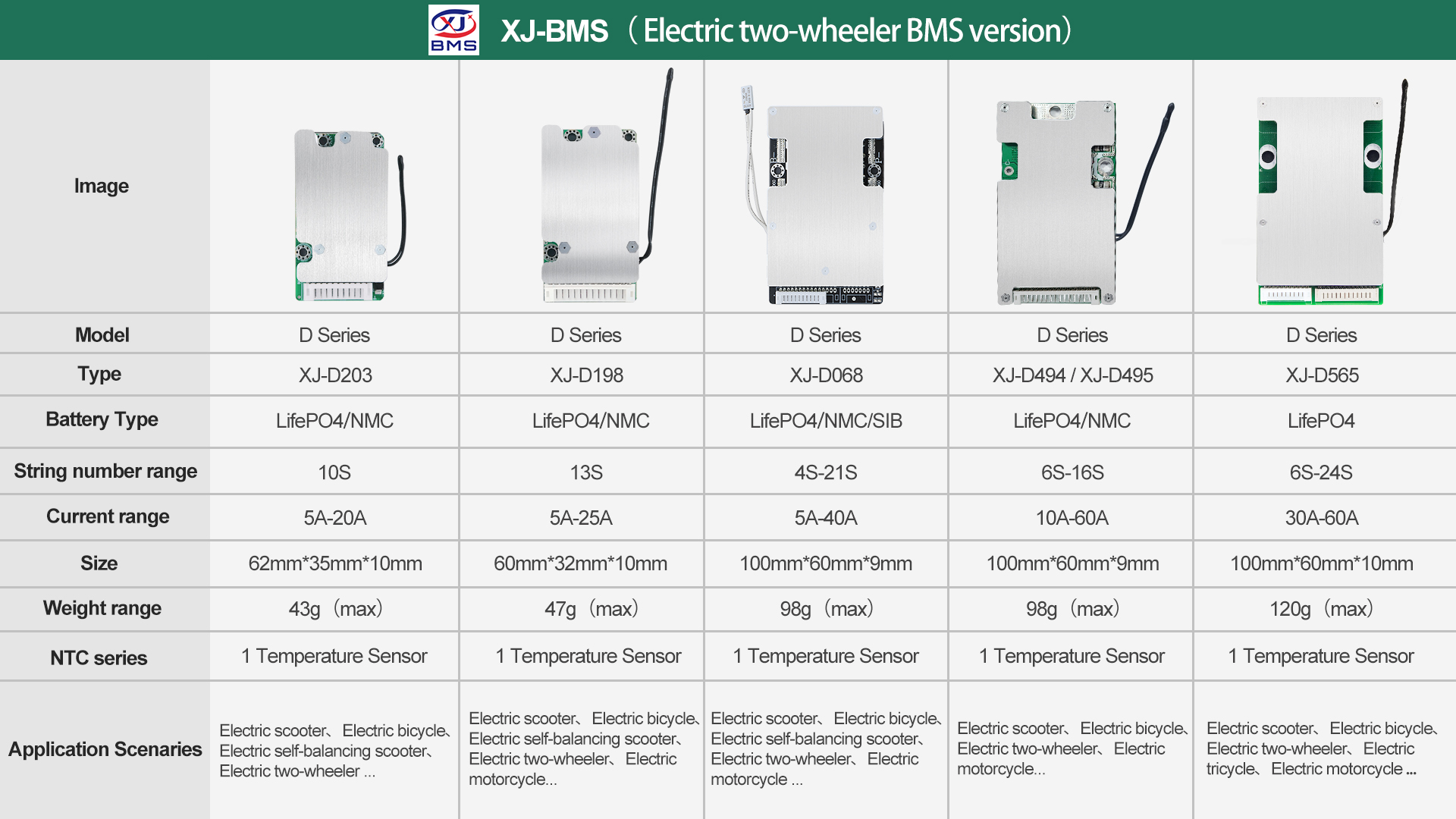
Our engineering team has been working with sodium-ion cell chemistries long before they became mainstream. We have tuned our firmware for sodium-ion voltage windows, flat-SoC curves, and cell-to-cell variation — and our boards are running in sodium-ion packs in the field today. The models below cover the full range from small 4S starter packs to 24S, 300 A storage systems.
Hardware BMS Boards
| Model | Cell Count | Current Rating | Dimensions (L×W×H) | Typical Sodium-Ion Use |
| 4S–21S | 10 A–40 A | 100×60×10 mm | ESS, 48 V–72 V storage packs, light EVs | |
| 4S–14S | 10 A–50 A | 100×60×10 mm | Two/three-wheelers, 48 V systems | |
| 4S–16S | 30 A–60 A | 90×50×7 mm | Compact 48 V–60 V packs, slim enclosures | |
| 4S–24S | 30 A–60 A | 100×60×10 mm | 48 V–72 V ESS, solar storage | |
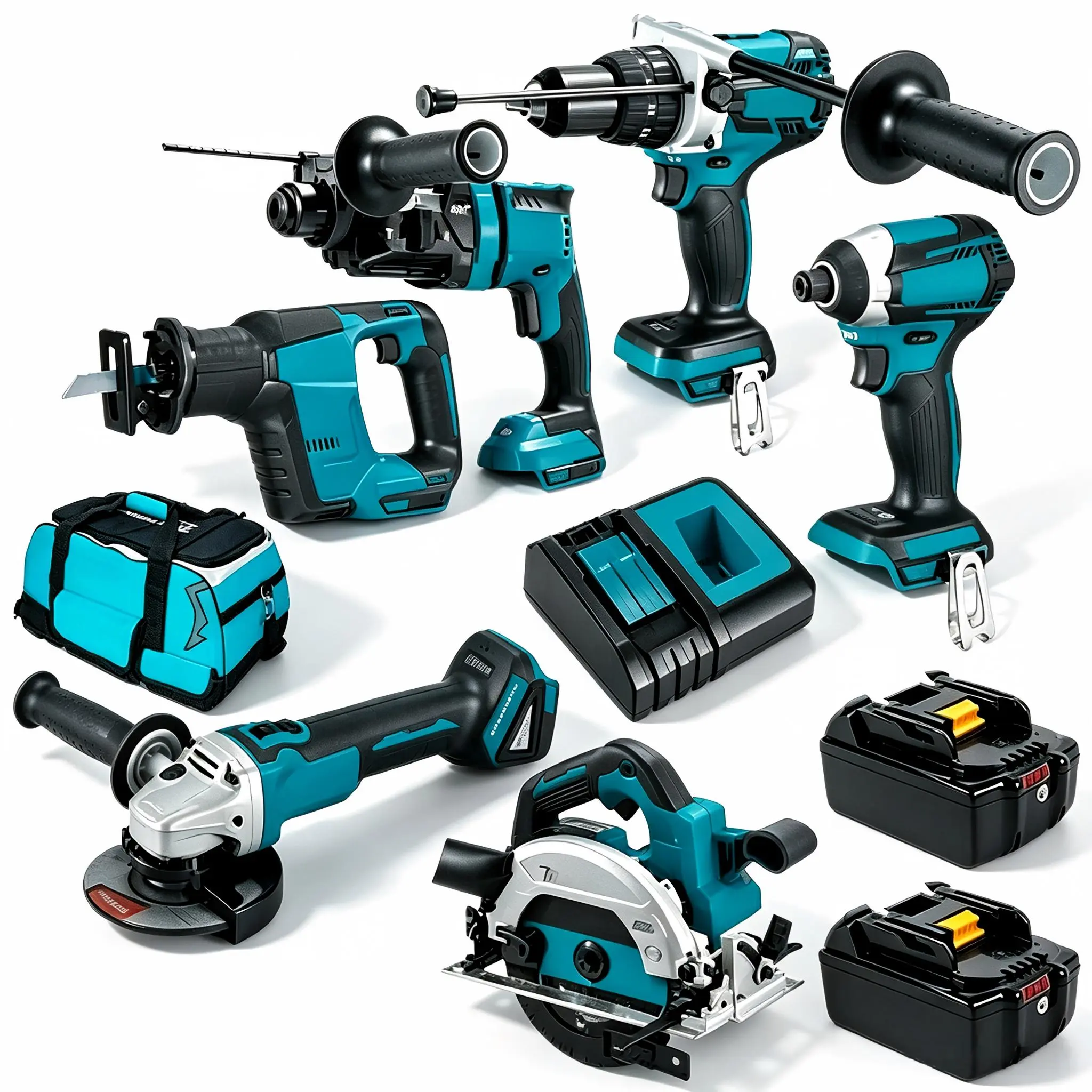
| 4S | 60 A–100 A | 161×65×12 mm | High-current 12 V packs, power tools, starter | |
| 4S | 100 A–150 A | 161×65×12 mm | Crank/boost applications, high-current 12 V | |
| 4S–25S | 50 A–150 A | 110×85×13 mm | High-power 48 V–96 V systems, commercial ESS | |
| 4S–24S | 150 A–300 A | 240×122×10 mm | Grid-scale / commercial storage, high-current banks |
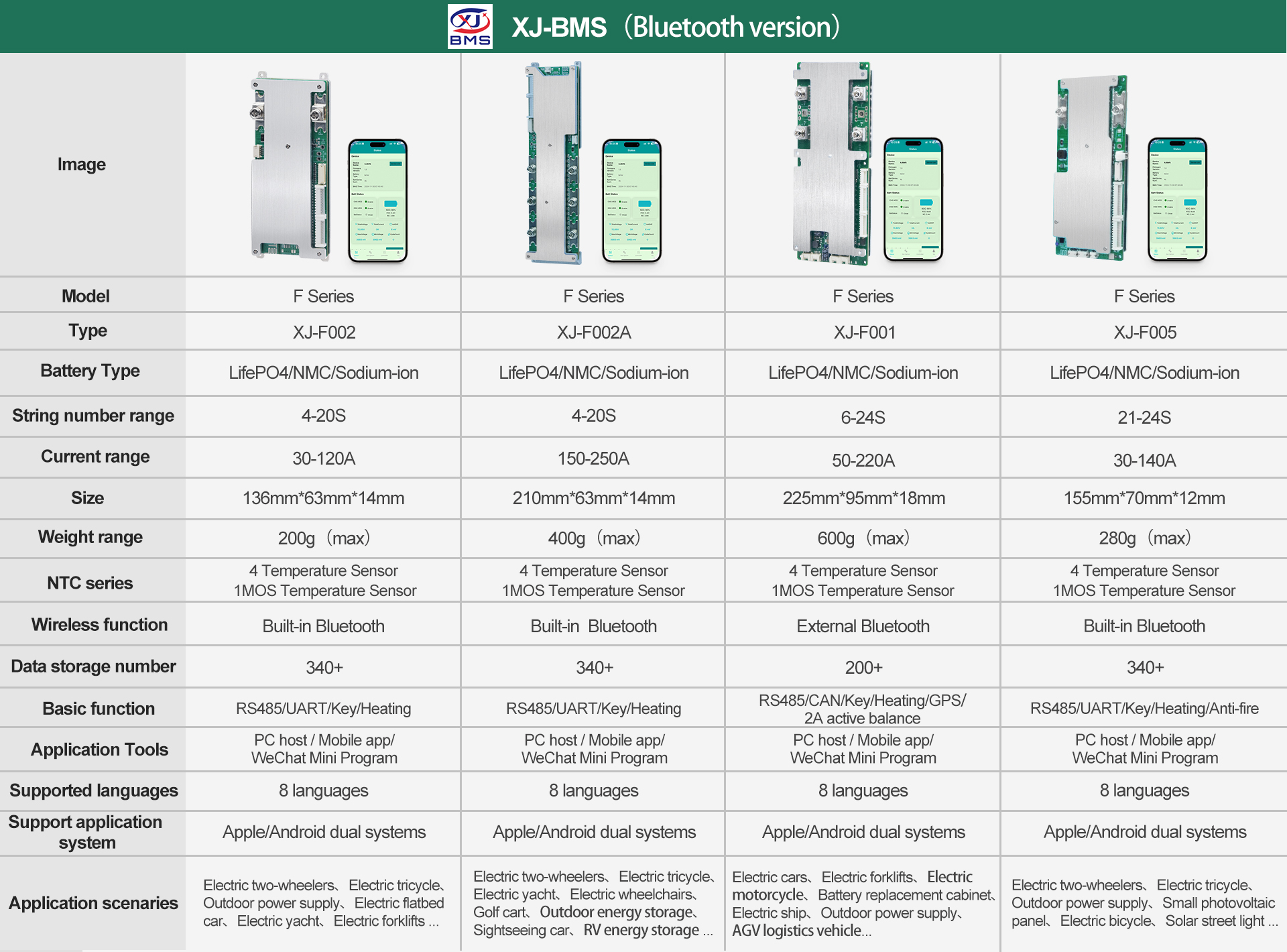
Bluetooth BMS Boards
When you need remote monitoring, app-based diagnostics, or OEV/cloud integration, our Bluetooth series adds wireless visibility without giving up protection performance.
| Model | Cell Count | Current Rating | Dimensions (L×W×H) | Typical Use |
| 4S–20S | 30 A–120 A | 136×63×14 mm | Smart ESS, two-wheelers with app monitoring | |
| 4S–20S | 150 A–250 A | 210×63×14 mm | High-current smart packs, commercial storage | |
| 4S–20S | 30 A–60 A | 100×65×9 mm | Compact smart packs, slim enclosure designs |
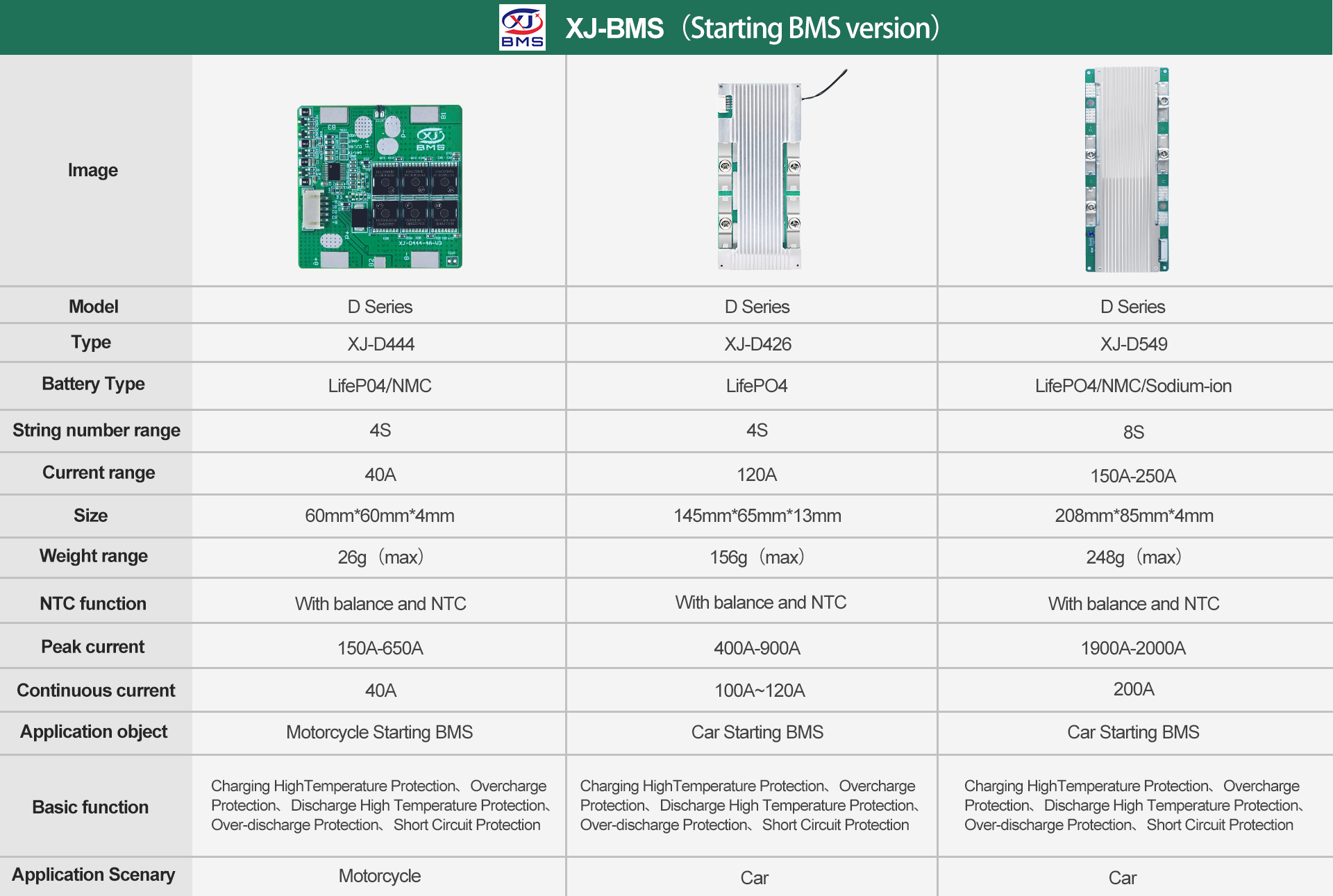
Starter Power BMS (Motorcycle & Car Jump-Starting)
Sodium-ion's high pulse-current capability and deep-discharge tolerance make it a strong candidate for jump-starters and lead-acid replacement. These boards are tuned for the very high transient currents that starter applications demand.
| Model | Cell Count | Current Rating | Application |
| 4S | 30 A / 40 A | Motorcycle starter packs, light-duty jump starters | |
| 4S | 100 A–120 A | 12 V car jump starters, portable power packs | |
| 8S | 150 A–250 A | 24 V commercial vehicle / truck jump starters, heavy-duty |
Active Balancers
For sodium-ion packs where passive balancing is not enough — especially 16S+ ESS or packs with known cell spread — active balancing transfers energy from higher-voltage cells to lower-voltage ones rather than burning it off as heat.\
- Capacitor active balancer (4S / 8S / 16S, 5 A):Fast, efficient energy transfer using a capacitor-based topology. Best for mid-voltage packs where balancing speed matters.
- Inductor active balancer (2S–24S, 2 A): Covers a wider cell-count range for packs where lower-but-steady balancing is sufficient. Good for extending pack life in long-cycle ESS applications.

Why Trust Us With Your Sodium-Ion Pack?
Sodium-ion BMS is not a side project for us. Our engineering team has been working with sodium-ion cell chemistries since the early pilot batches — tuning voltage thresholds, refining SoC algorithms for flat OCV curves, and accumulating field-cycle data on real sodium-ion packs. Our boards are not generic Li-ion reference designs with a sticker; they are firmware-tuned and field-proven for sodium-ion. When you spec an XJ board into a sodium-ion pack, you are getting a partner who already knows the chemistry, the failure modes, and the tuning — not a learning curve.
Contact us for samples, sodium-ion-specific firmware profiles, and custom configuration support.
 +86 15012973360
