



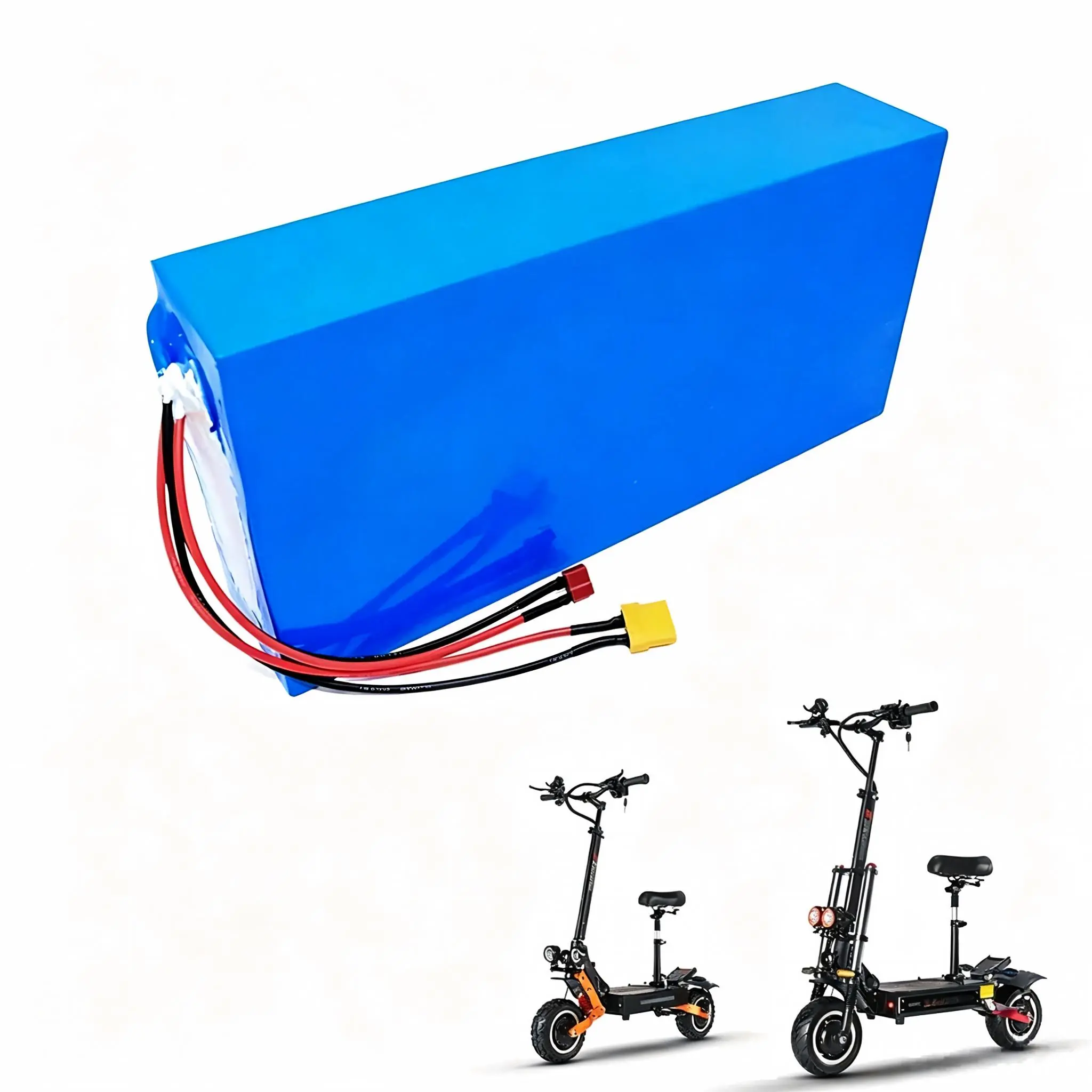
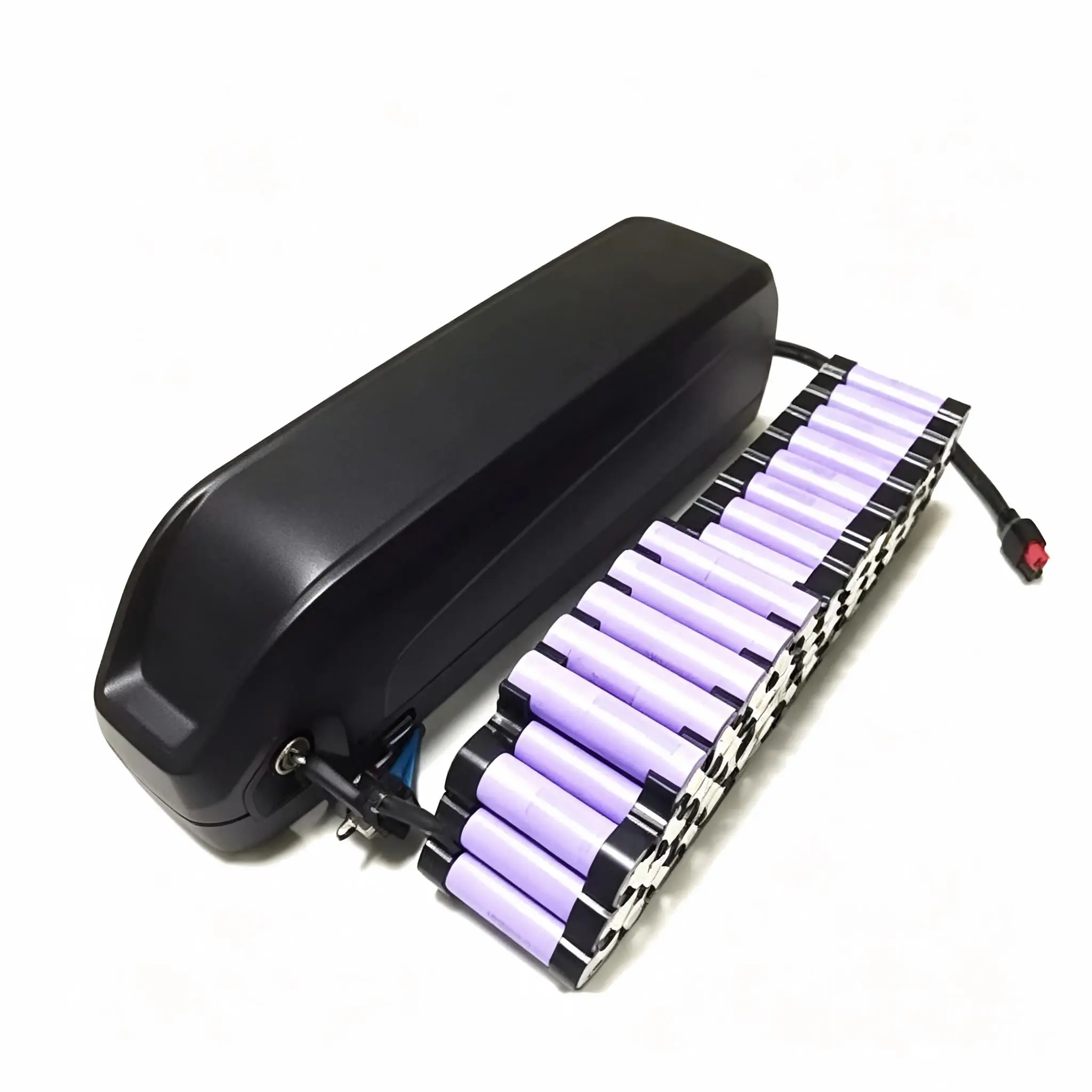
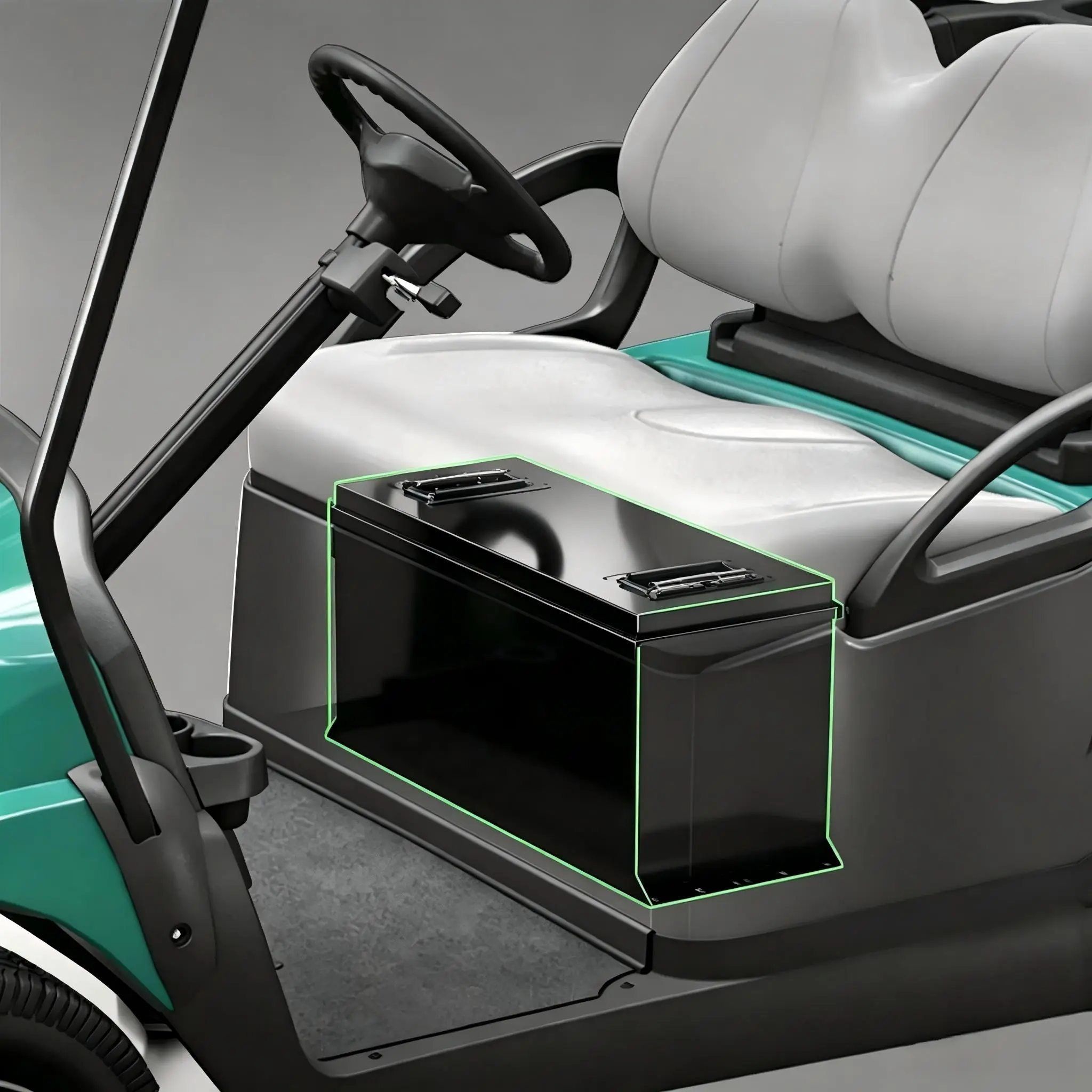
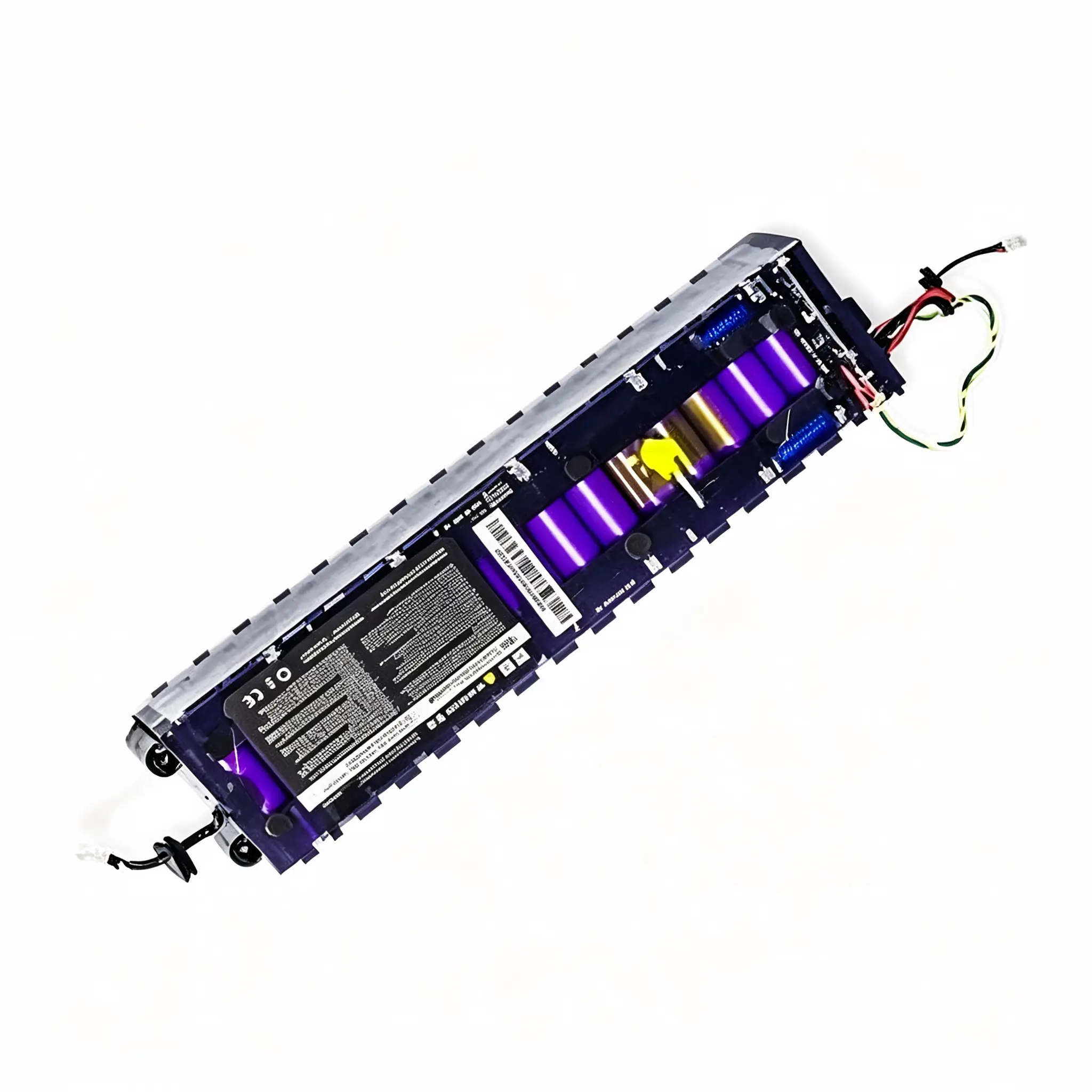
Power Tools & BMS Selection Guide: Types, Working Principles & XJBMS Matching Models
Power tools are mechanical devices driven by high-efficiency power sources including electric motors, battery systems, compressed air, or fuel engines. Completely different from traditional manual tools that rely on human force, modern power tools generate stable torque, strong impact force, high-frequency vibration, and high-speed mechanical motion through power-driven structures. They replace manual labor to complete various processing operations with higher speed, higher precision, and more consistent finished quality.
Widely used in construction, renovation, manufacturing, garden maintenance, and industrial processing scenarios, power tools cover core operation processes such as cutting, drilling, fastening, grinding, sanding, polishing, demolition, and material shaping. Most power tools adopt rotating blades, reciprocating mechanisms, or oscillating structures, which greatly improve construction efficiency and standardize operation effects. As cordless battery-powered power tools gradually become mainstream, a professional and stable BMS (Battery Management System) has become the core guarantee for tool safety, stable power output, and prolonged service life.
Four Core Classifications of Power Tools & Typical Applications
According to power sources, installation methods, and application scenarios, power tools are divided into four major categories: portable power tools, stationary power tools, pneumatic power tools, and outdoor power tools. Each type has distinct working conditions, power demands, and BMS matching standards.
1. Portable Power Tools
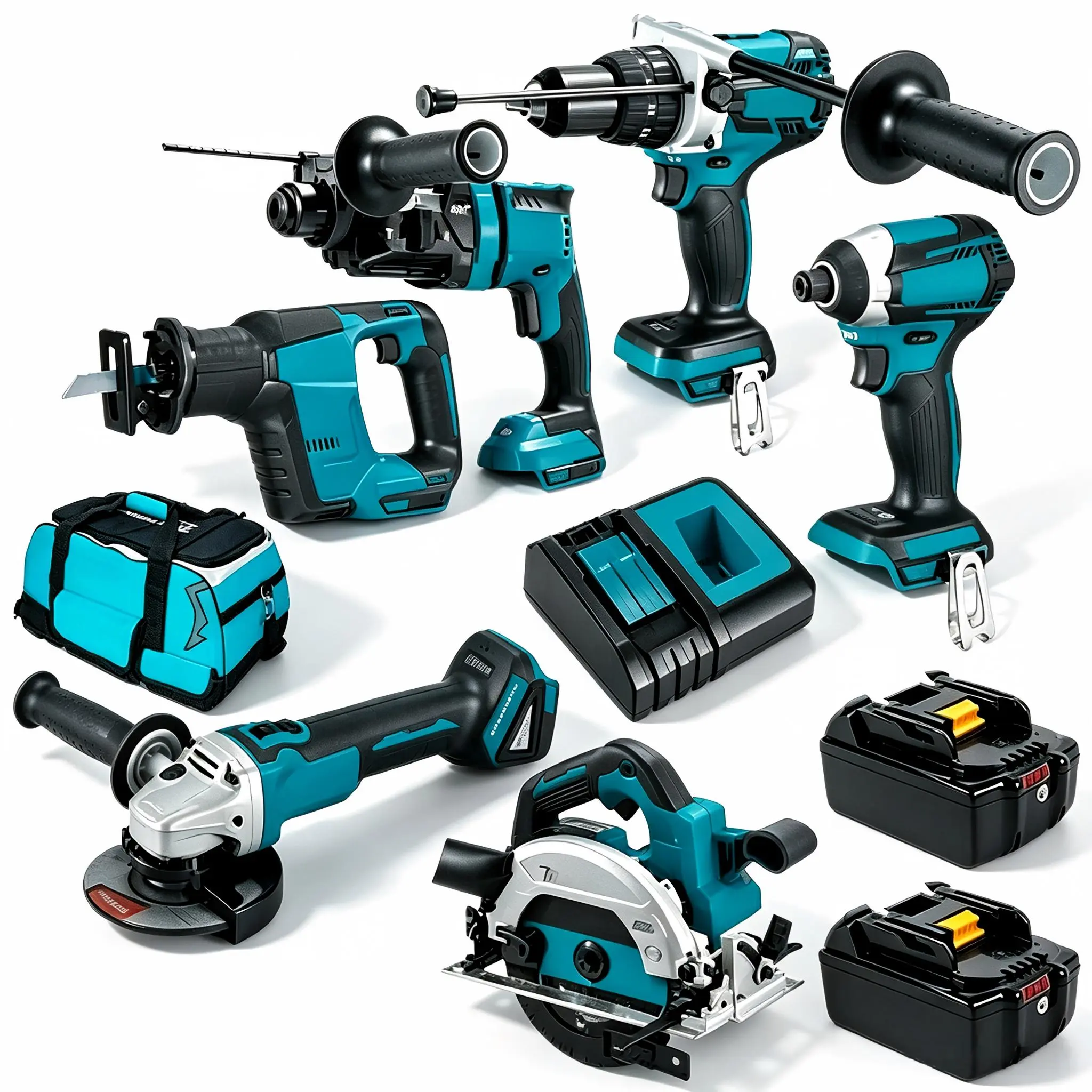
Portable power tools adopt a handheld lightweight design, featuring flexible movement, easy operation, and no site restrictions. They are the most widely used tools in building construction, indoor renovation, and daily maintenance projects. With frequent start-stop, instantaneous high-torque output, and intermittent working characteristics, these tools have strict requirements on BMS peak current resistance and instantaneous overcurrent protection.
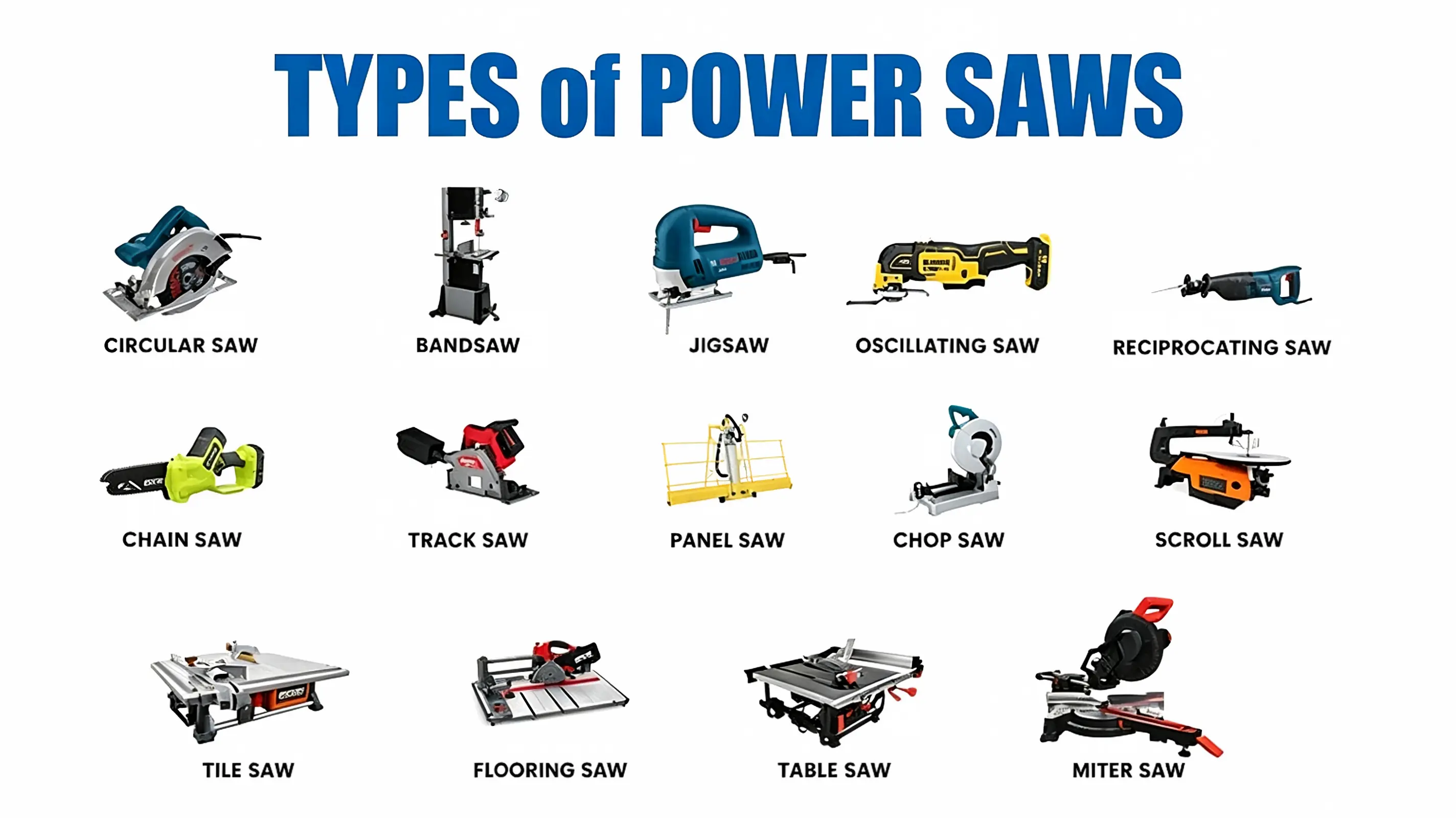
Common models: Cordless drills & screwdrivers, impact drills, circular saws, angle grinders, hand saws, random orbital sanders.
2. Stationary Power Tools
Stationary power tools are fixed professional processing machines installed in workshops and manufacturing factories. With excellent structural stability and processing accuracy, they are used for standardized batch cutting, polishing, and shaping of materials. These tools feature long-term continuous low-fluctuation operation, requiring BMS with stable continuous discharge performance and excellent heat dissipation adaptability.
Common models: Table saws, drill presses, band saws, bench grinders, planers.
3. Pneumatic Power Tools
Pneumatic power tools are driven by compressed air provided by air compressors, featuring sturdy durability, lightweight body structure, and ultra-high torque output. They are widely used in industrial assembly, automobile maintenance, and heavy-duty grinding scenarios. Although powered by air pressure, most modern pneumatic tools are equipped with auxiliary battery control systems, requiring BMS with strong anti-interference ability and stable low-current cycle performance.
Common models: Impact wrenches, pneumatic ratchet wrenches, nail guns, pneumatic sanders, bench grinders.
4. Outdoor Power Tools
Outdoor power tools are professionally designed for landscape maintenance and outdoor construction, working in complex environments such as high temperature, dust, and long-time open-air operation. They require BMS with excellent temperature resistance, overheating protection, and stable long-cycle discharge performance to adapt to harsh outdoor working conditions.
Common models: Chainsaws, lawn mowers, leaf blowers, electric pruning shears.
General BMS Hard Requirements for All Power Tools
Power tools belong to motor load equipment, with typical characteristics of instantaneous high current, frequent start-stop, and variable load operation. Different from consumer electronic BMS, power tool BMS focuses more on peak current resistance, over-temperature protection, and impact resistance. The unified industry hard requirements are as follows:
- Dual current tolerance: Support stable continuous discharge and 1.5–2 times instantaneous peak current impact to adapt to tool startup and load torque surge
- Strict over-temperature protection: Equipped with NTC temperature probe to avoid battery aging and safety hazards caused by motor heat conduction and long-time operation heating
- Complete basic protection: Overcharge, over-discharge, overcurrent, and short-circuit protection to prevent battery burnout and tool failure caused by abnormal current
- Low standby power consumption & strong stability: Adapt to intermittent use and long standby of tools, effectively extending battery standby time
- Basic cell balancing: Ensure consistent cell voltage after frequent charge and discharge, maintaining stable tool power output
Scenario-Based BMS Current & Specification Matching Rules
Portable Handheld Tools (Drills, Grinders, Saws)
Suitable for 4S–6S low-medium voltage BMS, with continuous current of 20A–60A and peak current supporting 40A–100A. Prioritize compact size and strong instantaneous overcurrent resistance to adapt to handheld portable battery packs.
Stationary Workshop Tools & High-Power Outdoor Tools
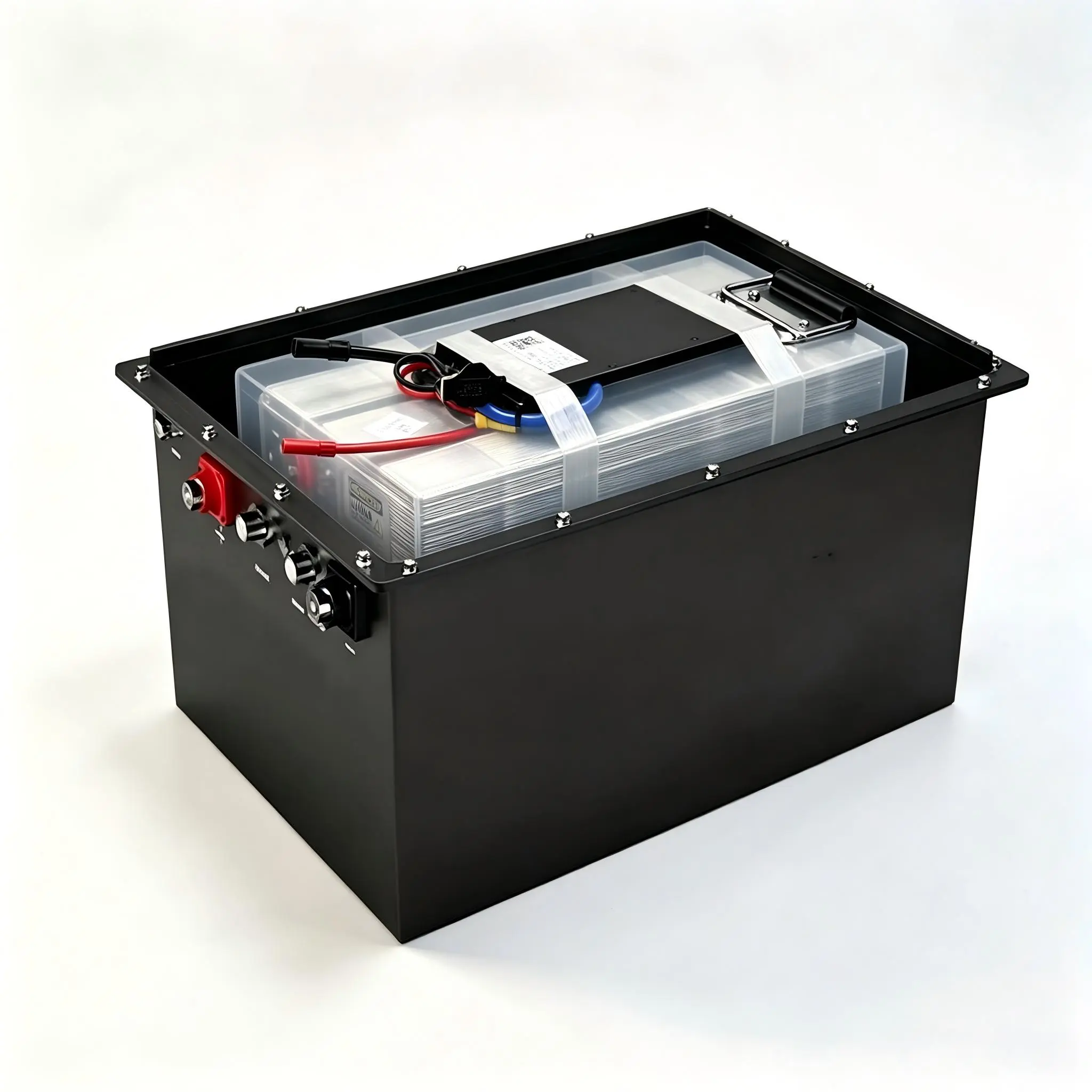
Suitable for 8S-20S high-current BMS, with continuous current of 100A–300A. Require stable long-term discharge performance and excellent heat dissipation, matching long-time continuous operation of table saws, lawn mowers, and chainsaws.
Pneumatic Auxiliary Battery Systems
Suitable for 1S–2S low-current mini BMS, with stable 1A–9A low-current cycle output, featuring anti-interference and ultra-low power consumption.
XJBMS Recommended Models for Full-Range Power Tools
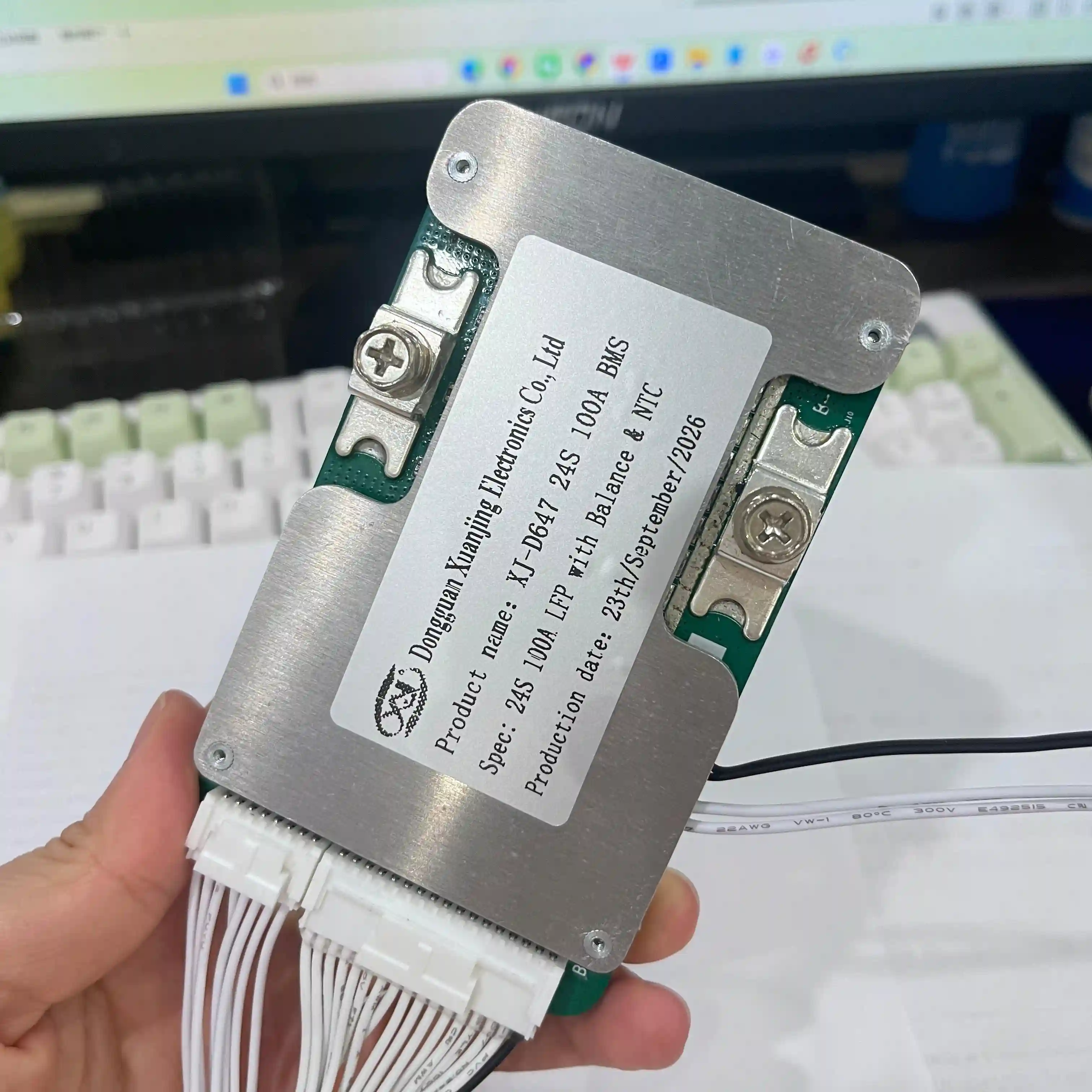
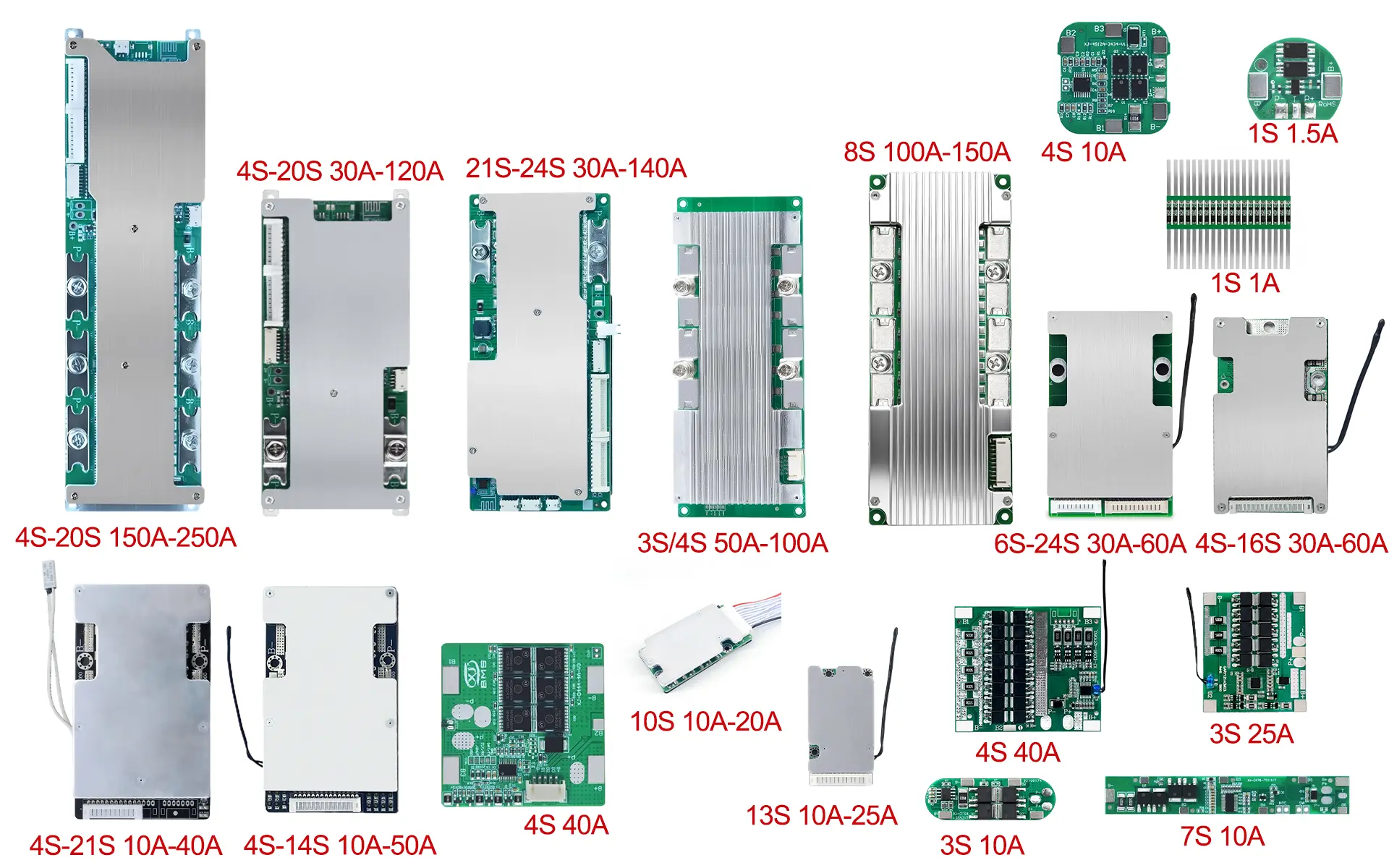
XJBMS provides professional BMS solutions covering low-current mini models to high-power industrial models, perfectly matching all types of portable, stationary, pneumatic, and outdoor power tools. All models support NTC temperature protection and cell balancing, fully adapting to motor load working conditions.
Hardware BMS Series (High Stability & Cost-Effective)
- XJ-D068: 4S-21S | 5A–40A charge & discharge, common port, size 100*60*10mm, low-current universal model, perfect for 60V electric tools and small outdoor garden equipment
- XJ-D494: 6S-16S | 5A charge / 30A–60A discharge, split port, size 90*50*7mm, separate charge and discharge design, suitable for outdoor equipment and light mobility devices requiring independent charging management
- XJ-D495: 6S-16S | 30A–60A charge & discharge, common port, size 90*50*7mm, medium-current mainstream model, widely used for 60V electric scooters and medium-power outdoor tools
- XJ-D565: 6S-24S | 30A–60A charge & discharge, common port, size 100*60*10mm, upgraded medium-current hardware board with better heat dissipation and overload resistance
- XJ-D386: 4S-24S | 50A–150A charge & discharge, common port, size 110*85*13mm, medium-high current industrial model, for high-power mobile equipment and heavy-load outdoor devices
- XJ-D038V5: 4S-20S | 150A–300A charge & discharge, common port, size 240*122*10mm, ultra-high current flagship model, exclusive for modified high-speed scooters, heavy-load robots and high-power RV power systems
Smart Bluetooth BMS Series (Intelligent Monitoring & Precise Protection)
- XJ-F002C: 4S-20S | 30A–60A charge & discharge, common port, size 100*65*9mm, compact smart BMS for standard 60V scooters and medium-power outdoor equipment
- XJ-F002: 4S-20S | 30A–120A charge & discharge, common port, size 136*63*14mm, universal intelligent BMS, supporting mobile APP real-time monitoring of battery voltage, current, temperature and cycle data
- XJ-F013: 4S-20S | 30A–120A charge & discharge, common port, size 155*70*12mm, upgraded stable smart model, suitable for long-term continuous operating intelligent mobile equipment
- XJ-F002A: 4S-20S | 150A–250A charge & discharge, common port, size 210*63*14mm, high-current intelligent BMS, for high-power 60V mobile devices and commercial heavy-load equipment
Conclusion
Power tools have diverse working scenarios and variable load demands, putting forward targeted and strict requirements for BMS current resistance, temperature protection and stability. Portable handheld tools need instantaneous peak current resistance, outdoor tools rely heavily on over-temperature protection, and stationary tools require stable long-cycle discharge performance. XJBMS full-range 1S–4S power tool-specific BMS covers all current grades and tool types, with complete safety protection, cell balancing and NTC temperature monitoring functions, providing reliable professional battery management solutions for global power tool manufacturers and DIY users.
 +86 15012973360
