


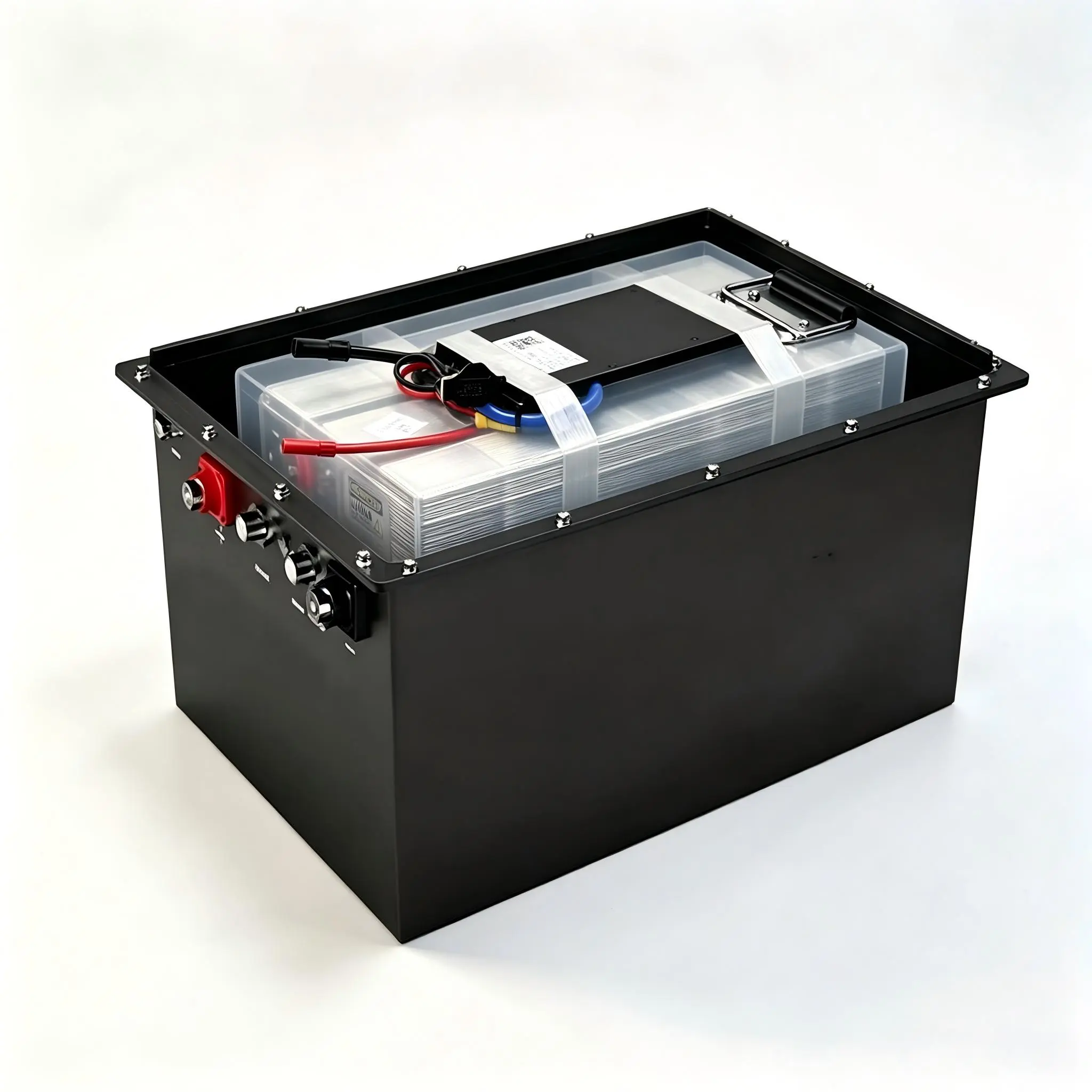
How to Choose a BMS for Car Starting Batteries?
A reliable car starting battery is essential for your vehicle’s smooth operation, and a high-qualityBattery Management System (BMS) is the key to protecting this battery, ensuring safe starting, and extending its service life. Choosing the wrong BMS for your car starting battery can lead to battery damage, failed starts, overheating, or even safety hazards—especially for vehicles that rely on consistent, high-power starting.
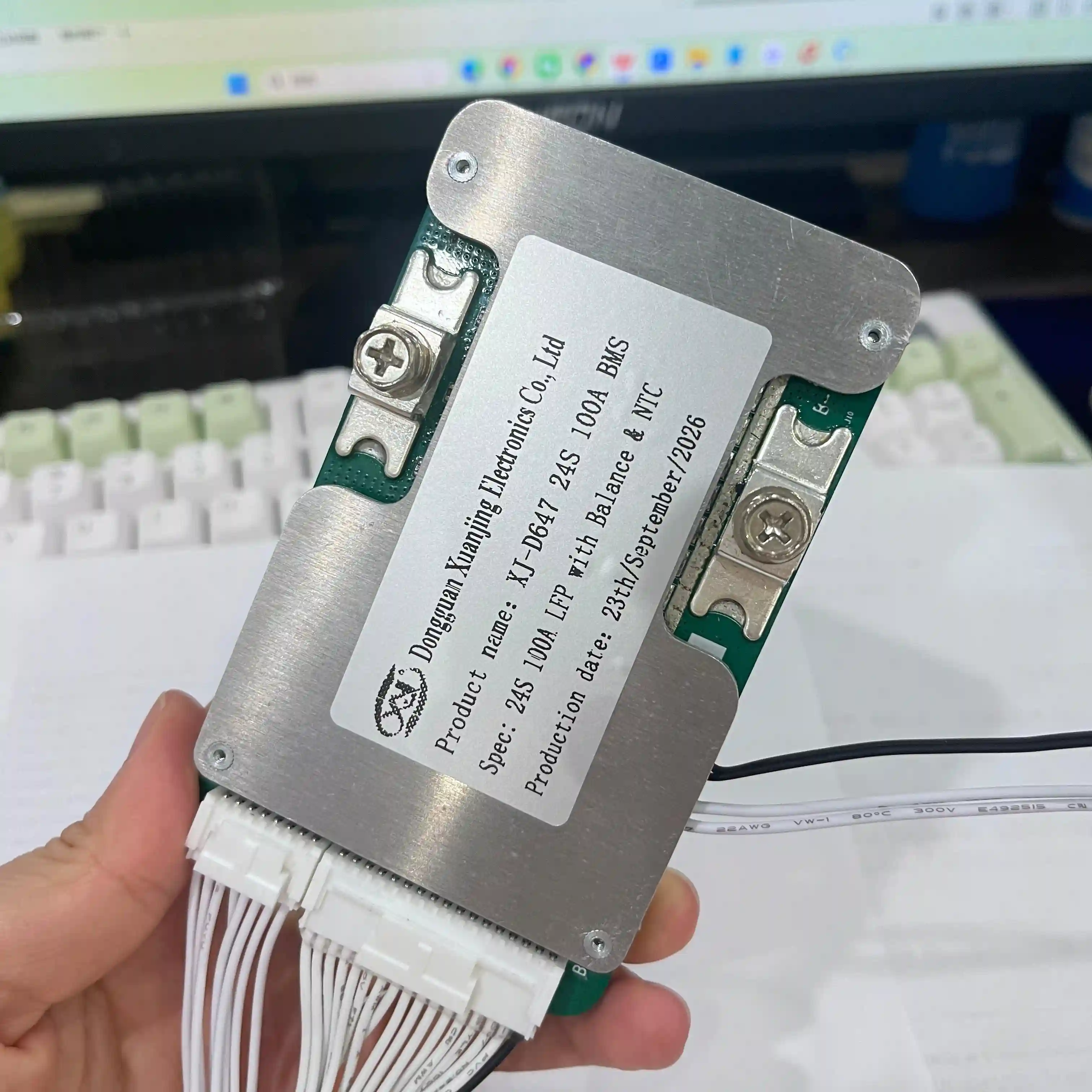
In this comprehensive guide, we’ll walk you through the critical steps to choose the perfect BMS for your car starting battery, whether it’s for a standard passenger car, a heavy-duty vehicle, or a compact vehicle. We’ll also highlight our three top-tier car starting battery BMS models—XJ-D426, XJ-D549, XJ-D444—all equipped with essential features like balancing, temperature control, and full protection to keep your car starting battery in top condition.
Key Factors to Consider When Choosing a Car Starting Battery BMS
Car starting batteries have unique requirements—they need to deliver high peak current for quick, reliable starts, while also being protected from common issues like overcharging, over-discharging, and overheating. Here are the non-negotiable factors to focus on:
Series (S): Match Your Car Starting Battery’s Cell Configuration
The BMS series (number of lithium battery cells in series) must match your car starting battery exactly. Most car starting lithium batteries use 3S, 4S, or 8S configurations, and our models are tailored to these common setups:
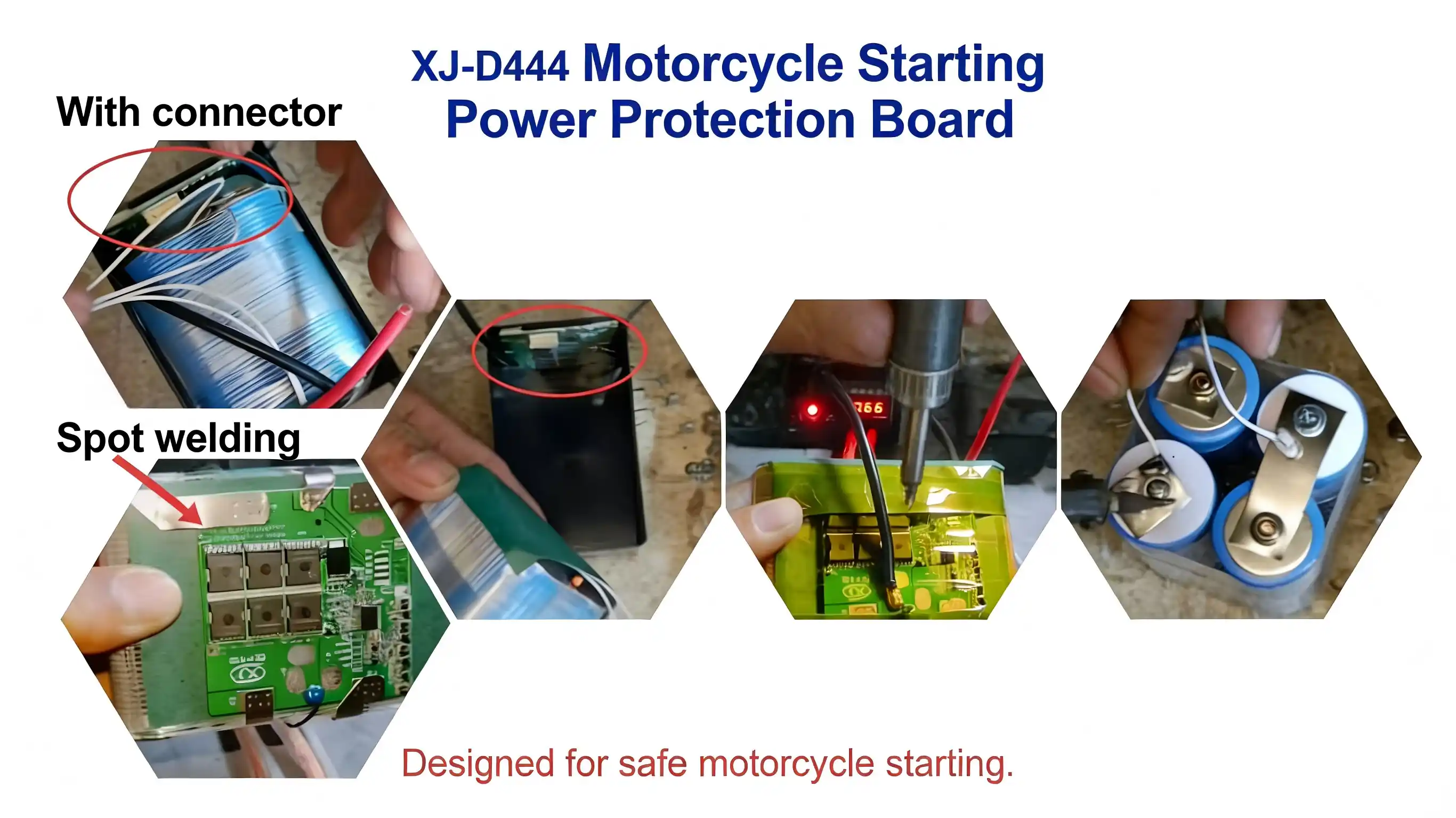
- 3S/4S: Ideal for standard 12V car/motorcycle starting batteries (the most common for passenger cars and compact vehicles). Our compatible model: XJ-D444(supports both 3S and 4S configurations, flexible for different battery setups).
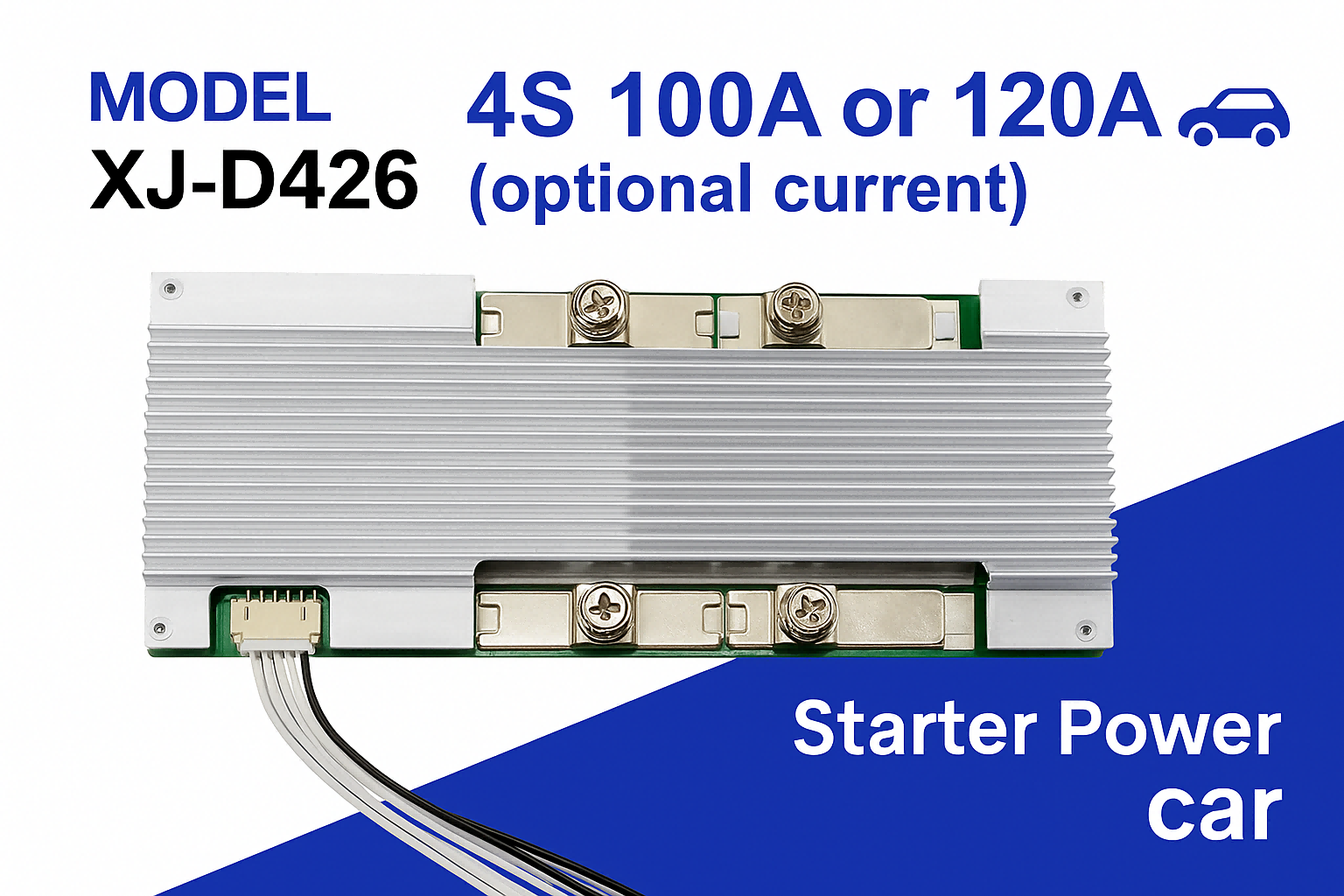
- 4S: Specifically designed for 12V high-performance starting batteries. Our compatible model: XJ-D426(4S dedicated, optimized for stable 12V starting power).
- 8S: For 24V heavy-duty car starting batteries (used in trucks, buses, and large commercial vehicles). Our compatible model: XJ-D549(8S dedicated, built for high-power heavy-duty starting).
Current Rating: Match Starting Power Requirements
Car starting batteries need high peak current to crank the engine, and the BMS must support both continuous discharge current (for steady operation) and peak discharge current (for quick starts). Choose based on your vehicle’s starting power needs:
- Compact/Standard Passenger Cars (low to medium starting power): Need a BMS with 30-40A continuous current and 600-700A peak current. Our top pick: XJ-D444 (30A/40A continuous, 650A peak) – perfect for daily commuter cars and small vehicles, with reliable starting support.
- Standard/High-Performance Passenger Cars (medium to high starting power): Require 100-120A continuous current and 800-1000A peak current. Our top pick: XJ-D426 (100A/120A continuous, 1000A peak) – engineered for consistent, high-power starts, ideal for most passenger cars and light-duty vehicles.
- Heavy-Duty Vehicles (trucks, buses, commercial vehicles): Need 150-250A continuous current and 1500-2000A peak current. Our top pick: XJ-D549 (150A/200A/250A continuous, 2000A peak) – built for heavy-duty starting demands, with extra power margin for reliable performance.
Essential Protection Features (Non-Negotiable)
Car starting batteries operate in harsh conditions (extreme temperatures, frequent charging/discharging), so the BMS must have full protection features to prevent damage. All our models (XJ-D426, XJ-D549, XJ-D444) come standard with these critical features:
- Cell Balancing: Automatically balances voltage across all battery cells, eliminating "weak cell" effect, extending battery life, and ensuring consistent starting power.
- Temperature Control (Thermal Protection): Monitors battery temperature in real time, cuts off current when overheated or overcooled, preventing thermal runaway and battery damage—critical for vehicles in extreme hot or cold climates.
- Full Basic Protection: Overcharge protection (prevents battery damage from overcharging), over-discharge protection (avoids deep discharge that shortens battery life), over-current protection (protects against overload), and short circuit protection (prevents safety hazards).
Choose by Vehicle Type: Tailor to Your Car’s Needs
Different vehicles have different starting power requirements—here’s how to match our BMS models to your specific vehicle type:
Compact/Standard Passenger Cars/Motorcycle (12V Battery)
Needs: Flexible, reliable, cost-effective BMS that supports 3S/4S batteries and moderate starting power.
Our Pick: XJ-D444 (3S/4S, 30A/40A continuous, 650A peak) – The most versatile option for small to mid-size passenger cars. Its dual-series compatibility (3S/4S) makes it easy to install with different 12V starting battery setups, and its built-in balancing and temperature protection ensure long battery life.
Standard/High-Performance Passenger Cars (12V Battery)
Needs: High peak current, stable performance, and 4S dedicated support for consistent starting.
Our Pick: XJ-D426 (4S, 100A/120A continuous, 1000A peak) – Designed for vehicles that require more starting power (e.g., high-performance cars, SUVs). Its 1000A peak current ensures quick, reliable starts even in cold weather, and its full protection features keep the battery safe during frequent use.
Heavy-Duty Vehicles (24V Battery: Trucks, Buses, Commercial Vehicles)
Needs: High continuous and peak current, 8S dedicated support, and rugged durability for harsh conditions.
Our Pick: XJ-D549 (8S, 150A/200A/250A continuous, 2000A peak) – The ultimate BMS for heavy-duty starting batteries. Its 2000A peak current handles the high-power demands of large vehicles, and its robust design and thermal protection make it suitable for commercial use in all climates.
Common Mistakes to Avoid When Choosing a Car Starting BMS
- Ignoring Series Matching: Choosing a BMS with the wrong series (e.g., 8S for a 4S battery) will fail to protect the battery and may cause immediate damage.
- Underestimating Peak Current: A BMS with insufficient peak current will struggle to start the engine, especially in cold weather or for high-performance/heavy-duty vehicles.
- Skipping Balancing & Temperature Control: Without these features, battery cells will degrade quickly, leading to shorter lifespan and unreliable starts.
- Choosing Unbranded/Low-Quality BMS: Cheap, untested BMS lack proper protection, increasing the risk of battery failure, overheating, or safety hazards.
- Overlooking Vehicle Voltage: Confusing 12V (3S/4S) and 24V (8S) batteries—always match the BMS to your battery’s voltage and series.
Our Top Car Starting Battery BMS Models: At a Glance
For quick reference, here’s a summary of our three models and their ideal use cases:
- XJ-D444: 3S/4S, 30A/40A continuous, 650A peak – Best for compact/standard passenger cars (12V), flexible and cost-effective.
- XJ-D426: 4S, 100A/120A continuous, 1000A peak – Best for standard/high-performance passenger cars (12V), high peak current for reliable starts.
- XJ-D549: 8S, 150A/200A/250A continuous, 2000A peak – Best for heavy-duty vehicles (24V), built for high-power commercial use.
All three models include cell balancing, temperature control, and full basic protection—ensuring your car starting battery is safe, reliable, and long-lasting.
Final Key Takeaways
Choosing the right BMS for your car starting battery comes down to three core steps: match the BMS series to your battery’s cell configuration, align the current rating (continuous and peak) with your vehicle’s starting power needs, and prioritize essential protection features (balancing, temperature protection, full safety protection).
Our XJ-D426, XJ-D549, and XJ-D444 models are engineered specifically for car starting batteries, covering all common vehicle types from compact cars to heavy-duty commercial vehicles. With their tailored specs and built-in protection, they ensure your car starts reliably every time, while extending the life of your starting battery.