The global new energy vehicle (NEV) market is accelerating at unprecedented speed—driven by sustainability goals, government incentives, and advancing technology. From compact electric cars to commercial delivery vans, NEVs are reshaping transportation. But as battery-powered vehicles become ubiquitous, one question looms large for manufacturers and consumers alike: How do we mitigate the inherent risks of lithium-ion batteries?
Lithium-ion batteries (the backbone of NEVs) deliver impressive range and power, but they carry intrinsic hazards—overcharging, over-discharging, short circuits, and thermal runaway—if not properly managed. The answer lies in a critical component: the battery management system (BMS). But does a BMS guarantee EV safety? Let’s break down the risks, how BMS solves them, and our high-value BMS lineup engineered for NEV reliability.
Lithium-ion batteries are energy-dense, but their chemistry is sensitive. Common risks include:
- Thermal runaway: Overheating (from overcharging, short circuits, or manufacturing defects) can trigger a chain reaction leading to fires or explosions—one of the most feared EV safety issues.
- Cell imbalance: NEV battery packs have hundreds of cells; imbalance (from manufacturing variations or repeated use) causes some cells to overcharge/over-discharge, accelerating degradation and increasing failure risks.
- Overcurrent damage: Sudden current spikes (e.g., fast charging or aggressive driving) can damage battery cells and wiring, leading to malfunctions.
These risks aren’t just theoretical—high-profile EV battery incidents have highlighted the need for robust safety systems. For NEV manufacturers, prioritizing battery safety isn’t just compliance—it’s a competitive advantage that builds consumer trust.
A high-quality BMS isn’t a “magic bullet,” but it’s the foundation of EV battery safety. It acts as the battery’s “brain,” monitoring and regulating every critical function to prevent hazards:
- Overcharge/over-discharge protection: Shuts down charging when cells reach safe voltage limits and stops discharge before cells are depleted (the top causes of thermal runaway).
- Cell balancing: Ensures all cells charge/discharge uniformly, eliminating imbalance and extending battery life by 30–50%.
- Temperature control: Monitors battery temps in real time, reducing current or triggering cooling systems if temperatures rise too high (critical for hot climates or fast charging).
- Short-circuit/overcurrent protection: Cuts power instantly if a short circuit or current spike is detected, preventing wiring damage and fires.
For a BMS to deliver on safety, it must be tailored to the EV’s power needs, battery chemistry (LFP/NMC/SIB), and use case. Our BMS lineup is engineered to do exactly that—combining safety, performance, and value.
We offer two core BMS categories for new energy vehicles—covering entry-level to premium models, passenger cars to commercial fleets. All models prioritize the safety features that matter most for EVs, with global certifications (CE/UL) for compliance.
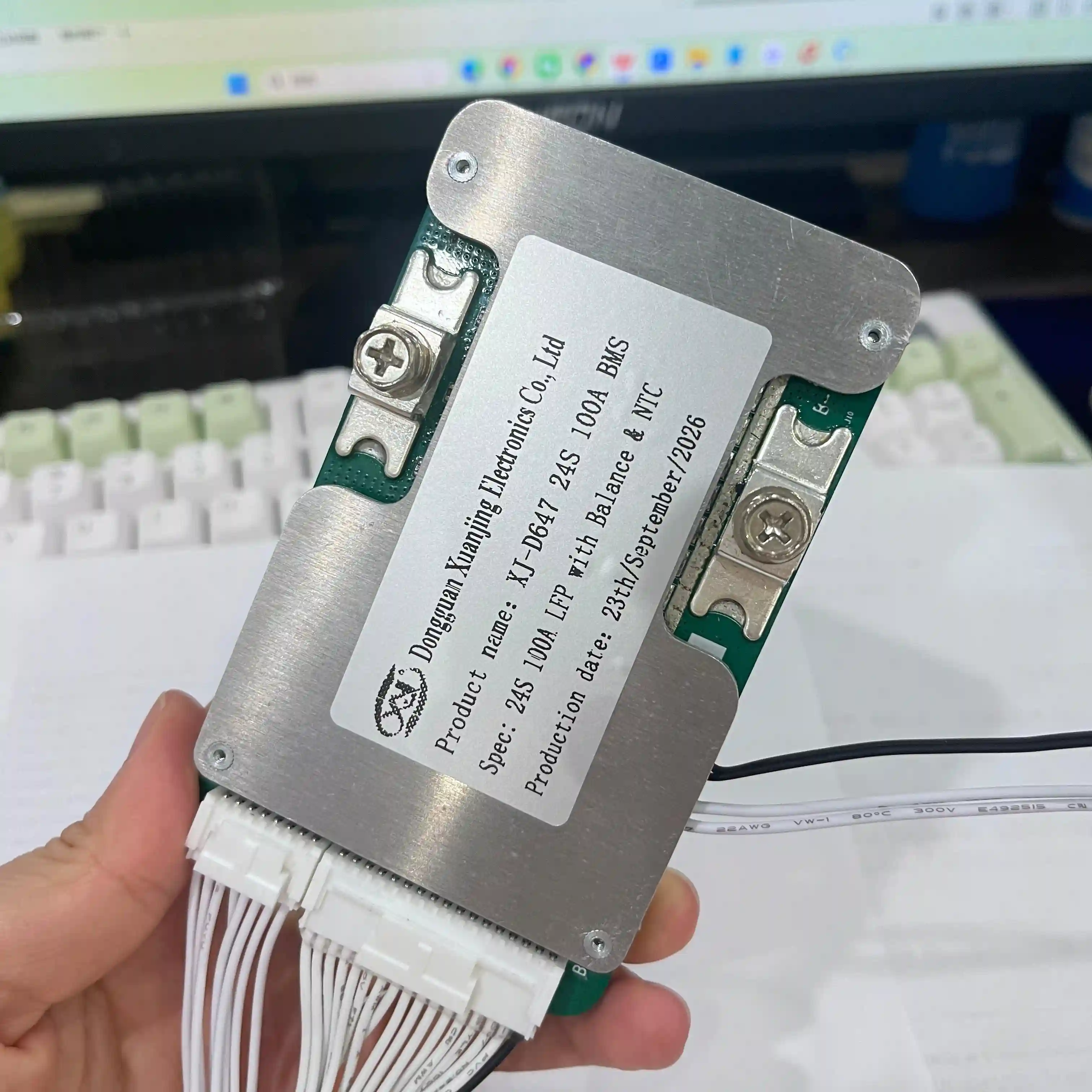
Ideal for entry-to-mid-range NEVs (compact cars, low-speed electric vehicles, or delivery scooters), our hardware BMS delivers core safety features at a competitive price—perfect for high-volume production.
For high-end passenger EVs, commercial fleets, or long-range models, our F-series smart BMS adds advanced features to enhance safety, performance, and monitoring.
All F-series models include active balancing (a step up from passive balancing in basic BMS), which transfers energy between cells for faster, more precise balancing—critical for high-performance EVs.
As the NEV market booms, battery safety will remain a top priority for manufacturers and consumers. A well-engineered BMS isn’t just a component—it’s an investment in trust, compliance, and long-term reliability. Our hardware and smart BMS lineup delivers the safety features EVs need, at a price that works for mass production and premium models alike.
Whether you’re building a compact electric car, a commercial delivery van, or a fleet of e-scooters, our BMS has you covered. All models are rigorously tested for EV-specific hazards (thermal stress, vibration, overcurrent) and backed by dedicated technical support.
Ready to prioritize safety in your NEV lineup? Contact us today: