In today's rapidly changing world of battery management systems, getting a good grip on Bms Schaltplan is pretty important. I heard Dr. Emily Carter from GreenTech Innovations say it well — she mentioned that having a detailed Bms Schaltplan can really boost your battery’s efficiency and last longer. That just goes to show how crucial it is to read these schematics correctly and even draw them accurately.
Think of a Bms Schaltplan as the roadmap for all those tiny, complex parts inside the battery system. It shows how everything connects, what each component does, and includes safety rules to keep things running smoothly. But honestly, a lot of beginners find it pretty tricky to understand all the details. If you're misreading it or getting some parts mixed up, it can lead to poor designs that hurt the battery’s performance in the long run.
Most experts agree: spend a little extra time learning how to read and create good Bms Schaltplans, and you'll reduce mistakes big time. Clear diagrams are super helpful for engineers talking shop, but let's be real — they can sometimes be a bit confusing too. Putting in the effort to really master these schematics can make a huge difference. As we go deeper into this, it’s worth thinking about common mistakes people make and how to steer clear of them for better results.

Designing an efficient Battery Management System (BMS) requires a solid understanding of its core principles. A BMS oversees the battery's health, safety, and performance. It ensures each cell operates within safe limits. Monitoring voltage, current, and temperature is crucial. This helps prevent overheating or undercharging.
Creating a BMS schaltplan is an intricate process. You need to identify connections for each cell. This includes establishing the series and parallel configurations. Pay close attention to the layout. Poor connections can lead to performance issues. Remember, simplicity often leads to better reliability. However, challenging designs can also teach valuable lessons.
New designers sometimes overlook specific details. For instance, wiring might seem straightforward but can complicate the overall design. Regular reviews of your drafts can reveal these issues early. Embrace feedback from experienced peers. It's important to adapt and refine your approach. Every BMS design can improve by reflecting on what works and what doesn’t.
Understanding a Battery Management System (BMS) is crucial for efficiency. The circuit diagram, or schaltplan, plays a vital role. A BMS typically consists of key components like sensors, controllers, and balancers. Each element helps ensure optimal battery performance. According to industry reports, improper management of battery cells can lead to a 30% decrease in lifespan.
Sensors monitor voltage and temperature. These metrics are essential for preventing thermal runaway. Controllers process this data, executing decisions to maintain safety. Balancers redistribute energy among cells. Reports indicate that effective balancing can extend battery life by up to 15%.
Creating an efficient BMS schaltplan requires attention to detail. Overlooking minor components can lead to significant issues. For instance, incorrect resistor values can affect current measurement accuracy. This may create inefficiencies. Proper design and thorough testing are necessary. By drafting detailed diagrams, engineers can preemptively address potential problems. Overall, the key is ensuring that each element works harmoniously.
Interpreting Battery Management System (BMS) schematics is crucial for efficient energy management. A well-designed BMS can enhance battery lifespan and improve overall efficiency. According to the International Energy Agency, efficient battery systems could increase the overall energy storage capacity by up to 50%. Understanding these schematics helps identify key components and their functions.
Key elements of a BMS include the battery cell monitoring, temperature management, and state of charge calculation. Each aspect plays a critical role in performance. For instance, cell monitoring ensures that no single cell becomes overcharged or undercharged. Studies indicate that improper monitoring can lead to a 20% reduction in battery life. Additionally, temperature management can avert thermal runaway situations.
When reading a BMS schematic, focus on symbols and connections. Misinterpretation can lead to design flaws. A common error involves overlooking critical safety features. Many engineers learn from past mistakes, highlighting the importance of detailed reviews. Simplified diagrams help, but complexity still exists. Engaging with these details is vital for safe and effective battery management.
Designing effective schematics for lithium-ion battery management is crucial. The global lithium-ion battery market reached $41 billion in 2021 and is projected to grow significantly. Effective designs enhance safety, efficiency, and longevity. A well-structured BMS (Battery Management System) schematic can prevent overheating and prolong battery life.
When creating a schematic, clarity is key. Use simple symbols and clear labels. This is essential for future troubleshooting. Inadequate design can lead to common issues like overcharging or cell imbalances. According to industry reports, 25% of battery failures are linked to poor management.
Detailed documentation aids in understanding complex schematics. Yet, many designs suffer from vague annotations. This can create confusion during implementation. Regular review and revision of designs promote continuous improvement. Efficiency can always be enhanced. Engaging with real-world case studies may reveal gaps. Being aware of common pitfalls helps in refining designs.
Creating efficient BMS diagrams requires attention to detail. Begin with clearly defined components. Identify each battery cell, control circuit, and safety feature. Use distinct symbols to represent varying elements. This helps in understanding complex interactions.
When drafting the diagram, consider the flow of energy. A well-structured layout minimizes confusion. Lines should indicate connections, while the labels ensure clarity. It's common to overlook minor details, which can lead to inefficiencies. Consistency in design is crucial, but don’t hesitate to iterate. Expect to make mistakes and learn from them.
Testing the diagram is equally important. Use simulation tools to visualize performance. This can reveal flaws that are not evident on paper. Encourage feedback from peers; a fresh set of eyes can spot issues you might miss. Embrace the process of refinement. Continuous improvement is vital for effective battery management systems.
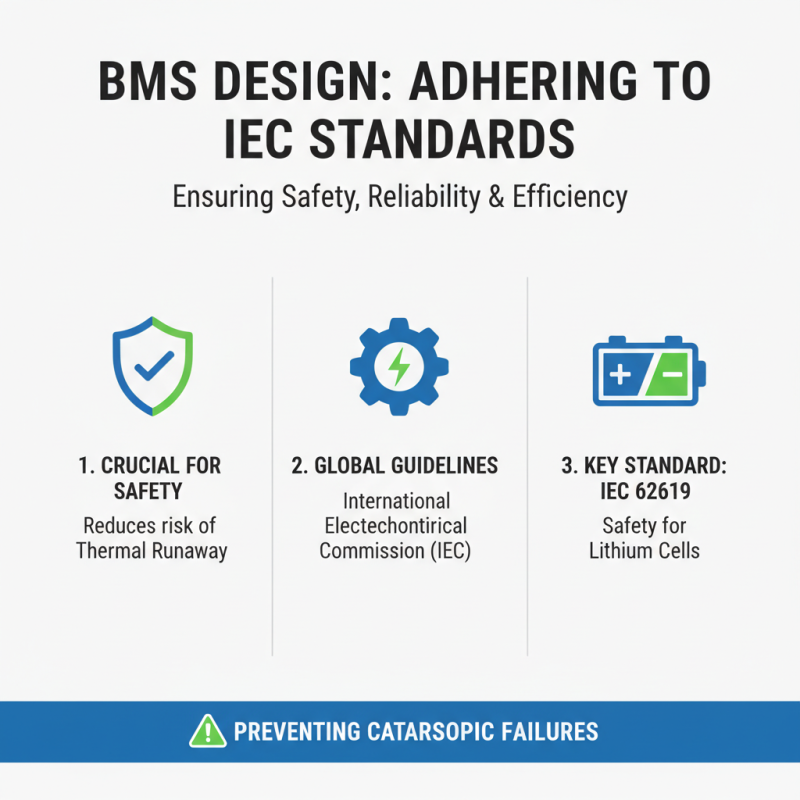
When designing Battery Management Systems (BMS), adhering to industry standards is crucial. The International Electrotechnical Commission (IEC) has established guidelines for BMS design. These standards ensure safety, reliability, and efficiency in battery use. For instance, IEC 62619 outlines safety requirements for secondary lithium cells. Compliance with such standards significantly reduces the risk of thermal runaway incidents, which have led to catastrophic failures in the past.
Moreover, the UN's recommendations for the transport of dangerous goods provide critical insights for BMS design. According to a recent report by the Battery Safety Council, improper management of battery packs accounted for 30% of incidents during transportation. This highlights the need for effective BMS that aligns with regulatory requirements. Without proper safety measures, the result can be devastating. Many companies fall short of these standards, leading to serious consequences.
The growing demand for electric vehicles (EVs) has intensified the focus on BMS design. As reported by the International Energy Agency, EV sales are expected to reach 30 million by 2025. This surge necessitates rigorous adherence to standards. However, not all manufacturers prioritize this, leaving room for potential failures. Every design choice impacts efficiency and safety. Therefore, a careful approach to BMS development is not just essential but mandatory.
When designing a Battery Management System (BMS), choosing the right tools and software is critical. Many engineers rely on simulation software, which is essential for modeling battery performance. For instance, the global battery management system market is projected to grow by 18% annually. This growth highlights the rising demand for efficient BMS tools.
Software solutions should offer robust features such as circuit design and thermal simulation. Tools like schematic capture and PCB layout enable engineers to visualize and create detailed BMS circuits. A recent study indicated that a well-designed BMS can improve battery life by 30%. This efficiency can lead to significant cost savings over time.
However, using complex software may pose challenges. Many engineers find learning curves steep, leading to potential errors in circuit design. A lack of experience can result in inefficient configurations, affecting battery performance negatively. Effective training and guidance can mitigate these challenges, but time investment is crucial.
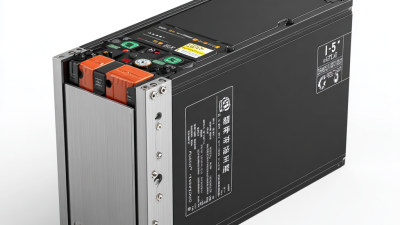
The XJ-D386 Battery Management System (BMS) offers a comprehensive solution for optimizing the performance of lithium battery packs ranging from 12V to 48V, making it an ideal choice for various electric vehicles. This advanced BMS is designed to accommodate 4 to 25 strings of battery cells, ensuring versatility in its application. With the capability to handle a maximum continuous working current of 100A to 150A, and a peak current of up to 450A, it supports multiple battery chemistries including ternary lithium, lithium iron phosphate, and sodium ion. This flexibility makes it suitable for a wide array of vehicles, such as low-speed electric vehicles, two-wheelers, three-wheelers, and forklifts.
The integration of such a high-performance BMS significantly enhances battery safety and stability. According to industry reports, the implementation of advanced battery management technology can lead to a reduction in battery failure rates by over 30%. By improving thermal management and protecting against overcurrent and overvoltage conditions, the XJ-D386 BMS effectively extends battery life, which is crucial for applications where battery longevity impacts operational efficiency and cost. With the ongoing demand for optimized energy solutions in the electric vehicle sector, advancements like those seen in the XJ-D386 BMS will play a pivotal role in shaping the future of sustainable transportation.
: The articles cover various topics including lifestyle, travel, and personal development.
Yes, consider time management techniques. Small changes can lead to significant improvements.
Research your destination thoroughly. Connect with locals for authentic experiences.
Break goals into smaller tasks. Celebrate small victories to stay motivated.
Absolutely! There are many practical suggestions and insights shared throughout.
Yes, mental well-being tips are included. Reflection and mindfulness are emphasized.
Trust your instincts. Don't hesitate to change plans if something feels off.
Many set unrealistic goals or expect quick results. Patience is key.
Regularly assess progress. Adjust goals if necessary to stay aligned with your values.
Introduce variety. Try new activities or change your environment. Reflection can help too.
The article "How to Read and Create Bms Schaltplan for Efficient Battery Management" provides a comprehensive overview of the fundamental concepts and components involved in Battery Management System (BMS) design. It starts by explaining the basics of BMS, highlighting key components essential for understanding the circuit diagram. Readers will learn how to interpret BMS schematics effectively, which is crucial for designing efficient systems specifically for lithium-ion battery management.
Moreover, the article outlines best practices for creating Bms Schaltplan diagrams to enhance efficiency and maintain compliance with industry standards and regulations. It also discusses various tools and software available for BMS circuit design and analysis, empowering engineers and designers to create robust and effective battery management solutions. By following the insights and guidelines provided, readers can improve their BMS design capabilities and ultimately contribute to the advancement of battery technology.